CNC Hydraulic Fully Automatic Bread Press vs. Commercial Stainless Steel Kneading Machine: A Comparative Guide for Purchasing and Selection
| Dimension | CNC Hydraulic Fully Automatic Commercial Pancake Press | Commercial Stainless Steel Dough Kneading Mixer 5kg-50kg | Analysis |
|---|---|---|---|
| Rated voltage | 220V / 110V / 380V | 220V / 380V | The cake press has more flexible voltage options and supports the 110V region; The dough kneader is only 220V/380V, but it covers mainstream commercial voltages. |
| Rated power | 2.2kW | 0.75-3kW | The cake press has a fixed power and is suitable for standard circuits; The power of a dough kneader varies with its capacity; smaller models are more energy-efficient, while larger models are more powerful. |
| Overall machine dimensions | 60×50×80cm | 因型号而异 | The cake pressing machine has a uniform and compact size, making it suitable for scenarios with limited space; The size of the dough kneader varies with its capacity; the specific model needs to be confirmed when purchasing. |
| Net weight | 85kg | 35-150kg | The cake pressing machine has moderate weight and is easy to move; Small models of dough kneaders are lighter, while large models are heavier, requiring consideration of the load-bearing capacity and movement requirements of the floor slab. |
| Warranty period | 1年 | 1年 | Both offer a one-year warranty and similar after-sales policies, but specific service terms need to be confirmed with the supplier. |
Introduction: Define your needs and choose the right equipment
In the procurement of commercial pasta equipment, CNC hydraulic fully automatic cake pressing machine and commercial stainless steel kneading machine These are two common but very different types of devices. The former focuses on flatbread forming and baking, while the latter focuses on dough mixing and kneading. Buyers need to make choices based on their own product line, production capacity needs, and kitchen space. This guide is based on objective parameters to help you make quick decisions.
Differences in application scenarios: Pressing dough vs. kneading dough
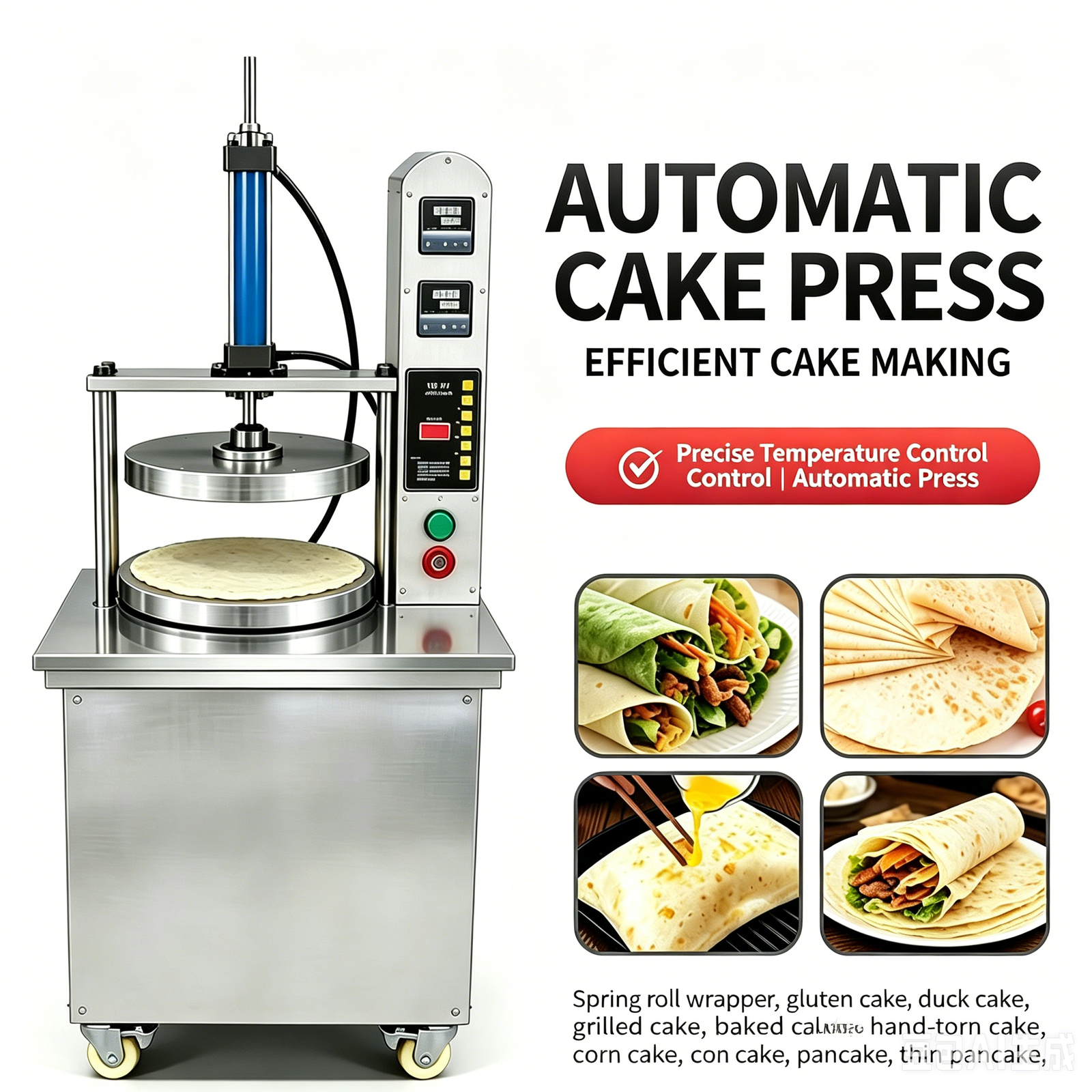
CNC hydraulic fully automatic cake pressing machine
Suitable for scenarios where flat noodles such as pancakes, spring roll wrappers, roast duck cakes, and tacos need to be produced quickly. Typical users include:
- Street breakfast shop Fresh pastries are sold daily, and meals are served quickly during the morning rush hour.
- Roast duck and Peking duck restaurant Producing perfectly sized spring pancake wrappers and roast duck pancakes.
- Mobile food trucks and market stalls Compact body (60×50×80cm), 220V power supply compatible with generator.
- Central Kitchen and Food Plant Industrial models support mass production and can operate continuously 24/7.
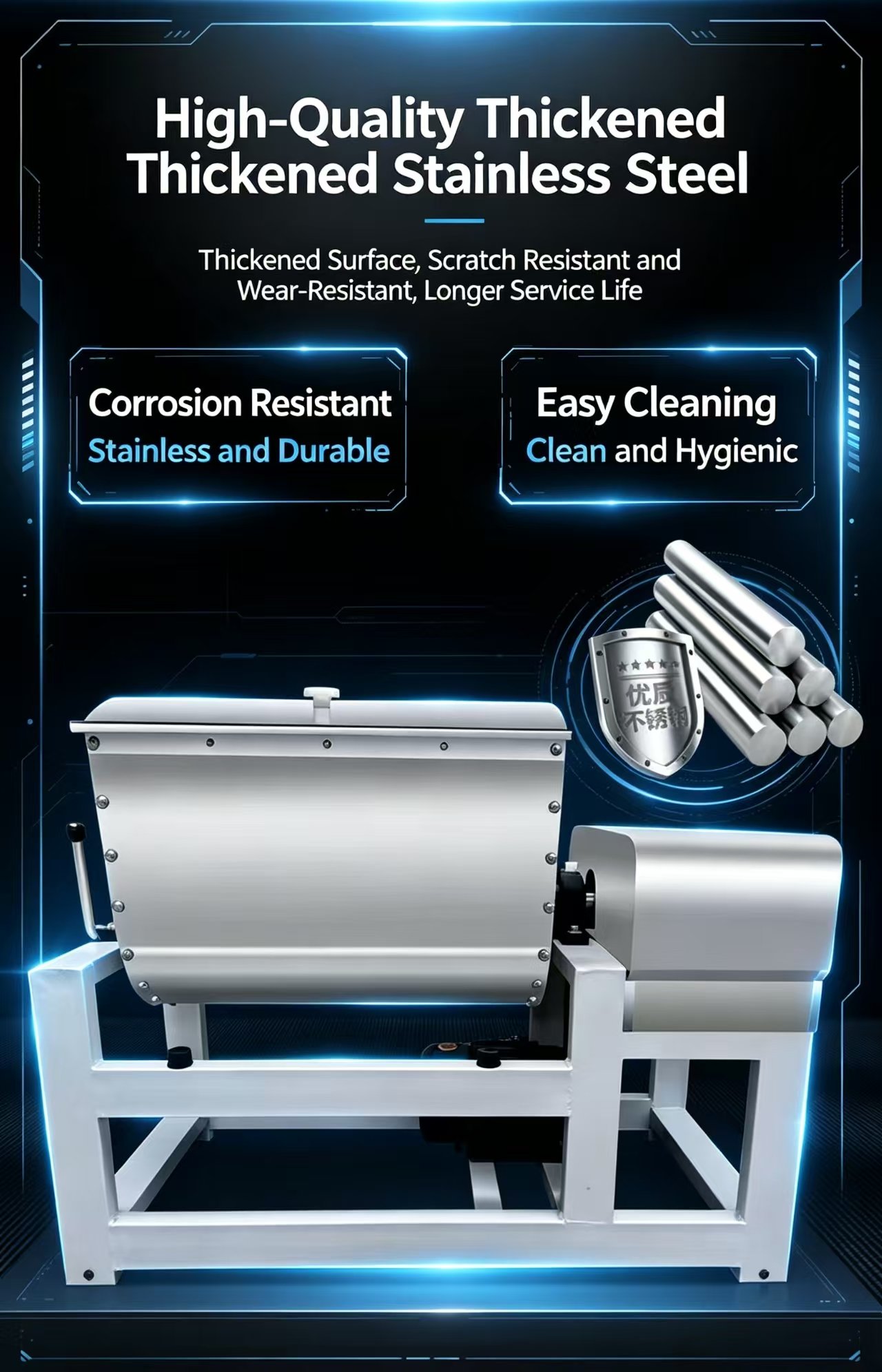
commercial stainless steel kneading machine
Suitable for scenarios where dough needs to be kneaded, noodles, bread, steamed buns and other fermented pasta products need to be made. Typical users include:
- chain noodle shop We produce ramen and knife-cut noodles in large quantities on a daily basis, with the 15kg model meeting peak demand.
- Steamed bun and steamed bun breakfast shop Knead soft dough, 5-8kg compact size suitable for small shops.
- Bakery Makes puff pastry, pie crust, and bread dough, with a quiet design that does not disturb customers.
- School and Corporate Canteens The 25kg and 50kg large capacity models can meet the needs of hundreds of people.
In short, the cake pressing machine is responsible for Forming and baking The dough kneader is responsible dough preparation 。 The two can be used together, but if the budget is limited and only one process is required, the core product should be selected.
Technical Comparison: Common Parameter Analysis
The two devices differ in terms of voltage, power, size, weight, and warranty. The following is a comparison of key shared parameters:
| parameter | CNC hydraulic fully automatic cake pressing machine | commercial stainless steel kneading machine |
|---|---|---|
| rated voltage | 220V / 110V / 380V | 220V / 380V |
| rated power | 2.2kW | 0.75-3kW (varies by model) |
| Overall machine dimensions | 60×50×80cm | Varies by model |
| net weight | 85kg | 35-150kg |
| Warranty period | 1 year | 1 year |
The cake press has a fixed power of 2.2kW, which is suitable for standard commercial circuits; The kneading machine has a wide power range, with the small 0.75kW model suitable for mobile scenarios and the large 3kW model suitable for continuous industrial operation. In terms of size, dough presses are compact and uniform, while dough kneaders vary greatly with capacity. When purchasing, it is necessary to confirm the width of the kitchen door and the placement space.
Selection advice: Make decisions based on business needs.
CNC hydraulic fully automatic cake presses should be given priority if:
- Your main product is Pancakes, spring roll wrappers, roast duck pancakes, tacos Flat-shaped pasta.
- You need Standardized thickness and diameter , eliminating manual bias.
- You hope Replace 2-3 workers , saving $1,500-$2,500 in labor costs per month.
- You need dual-mode operation (One-piece cake baking or independent pressing).
- Your kitchen has limited space and requires compact equipment (60×50×80cm).
Commercial stainless steel dough kneaders are preferred if:
- Your main product is Noodles, bread, steamed buns, steamed buns For pasta dishes that require kneading dough.
- You need Capacity selection from 5kg to 50kg Adaptable to different scales of production.
- You need low speed high torque (25-35 rpm) Simulate manual kneading.
- You need timing function (3-15 minutes) Adapt to different dough types.
- You need Quiet design , suitable for open kitchens.
Situation of simultaneous procurement of both
If you produce You need to knead the dough first and then press the flatbread. For products such as certain types of cakes, two pieces of equipment can be purchased simultaneously. The dough kneader is responsible for dough preparation, and the cake press is responsible for shaping and baking, forming a small production line. At this point, attention should be paid to the total power and space planning.
Frequently asked questions
Q: What are the return on investment periods for cake presses and dough kneaders?
A: A cake press can replace 2-3 workers, saving $1,500-2,500 in labor costs per month, and typically pays for itself in 2-3 months. Kneading machines also replace 2-3 workers, save $1,200-2,000 per month, and pay back the investment in 2-4 months. The specific payback period depends on local labor costs and output.
Q: Do both devices support custom voltages?
A: The cake press supports 220V/110V/380V, and also supports special voltage customization. The dough mixer is standard compatible with 220V or 380V, eliminating the need to modify existing kitchen facilities. If the voltage is special in your region, it is recommended to confirm customization options with the supplier before purchasing.
Q: How to choose the capacity of a dough kneader?
A: 5-8kg is suitable for small breakfast shops or mobile food trucks; 15kg is the mainstream and best-selling version, suitable for most noodle shops and bakeries; 25-50kg is suitable for canteens and central kitchens. It is recommended to choose according to the average daily flour consumption. Usually, the 15kg model can meet the needs of continuous flour serving during lunch and dinner peaks.