Commercial stainless steel dough mixer vs automatic dough splitter: purchase selection comparison guide
| Dimension | Commercial Stainless Steel Dough Kneading Mixer 5kg-50kg | Commercial Automatic Dough Divider & Portioning Machine 1g-500g | Analysis |
|---|---|---|---|
| Processing capacity | 5-50kg干面粉/批 | 1-500g/份,最高150份/分钟 | The dough mixer is processed in batches and is suitable for batch preparation; the divider is measured in single weight and capacity and is suitable for continuous division. |
| Motor power | 0.75-3kW | 450-900W | The power of the dough mixer is high, and it needs to drive large-capacity stirring; the power of the divider is low, but the precision is high. |
| Material of the fuselage | 304/430不锈钢 | 304食品级不锈钢 | Both are made of food grade stainless steel, but some models of the dough mixer use 430 stainless steel, and the dividing machine is definitely 304 stainless steel. |
| Net weight | 35-150kg | 40-80kg | The weight range of the dough mixer is wider, and the large model is heavier; the weight of the divider is relatively concentrated and easy to move. |
| Rated voltage | 220/380V | 220V | The dough mixer supports dual voltages and is suitable for different kitchen facilities; the divider is only 220V, but the power consumption is low. |
| Core features | 揉面、搅拌、混合、醒面 | 精准定量分割 | The noodle machine is multifunctional, and the dividing machine focuses on dividing. The two have different roles in the production line. |
Introduction: Clarify your needs, choose the right equipment.
In the field of noodle processing, dough mixers and dough dividers are two common types of equipment with distinctly different functions. The former is responsible for mixing flour with water into a mass, while the latter is used to accurately divide large pieces of dough into small portions of fixed weight. Many buyers, when planning their production lines, often find themselves uncertain about which equipment to prioritize purchasing. Based on product data, this article objectively compares commercial stainless steel dough mixing machines (5kg-50kg) with commercial full-automatic dough dividing and quantifying machines (1g-500g) to help you make wise decisions according to your own business scenarios.
Application scenario differences: from dough mixing to portioning
Dough mixer: the core of dough preparation
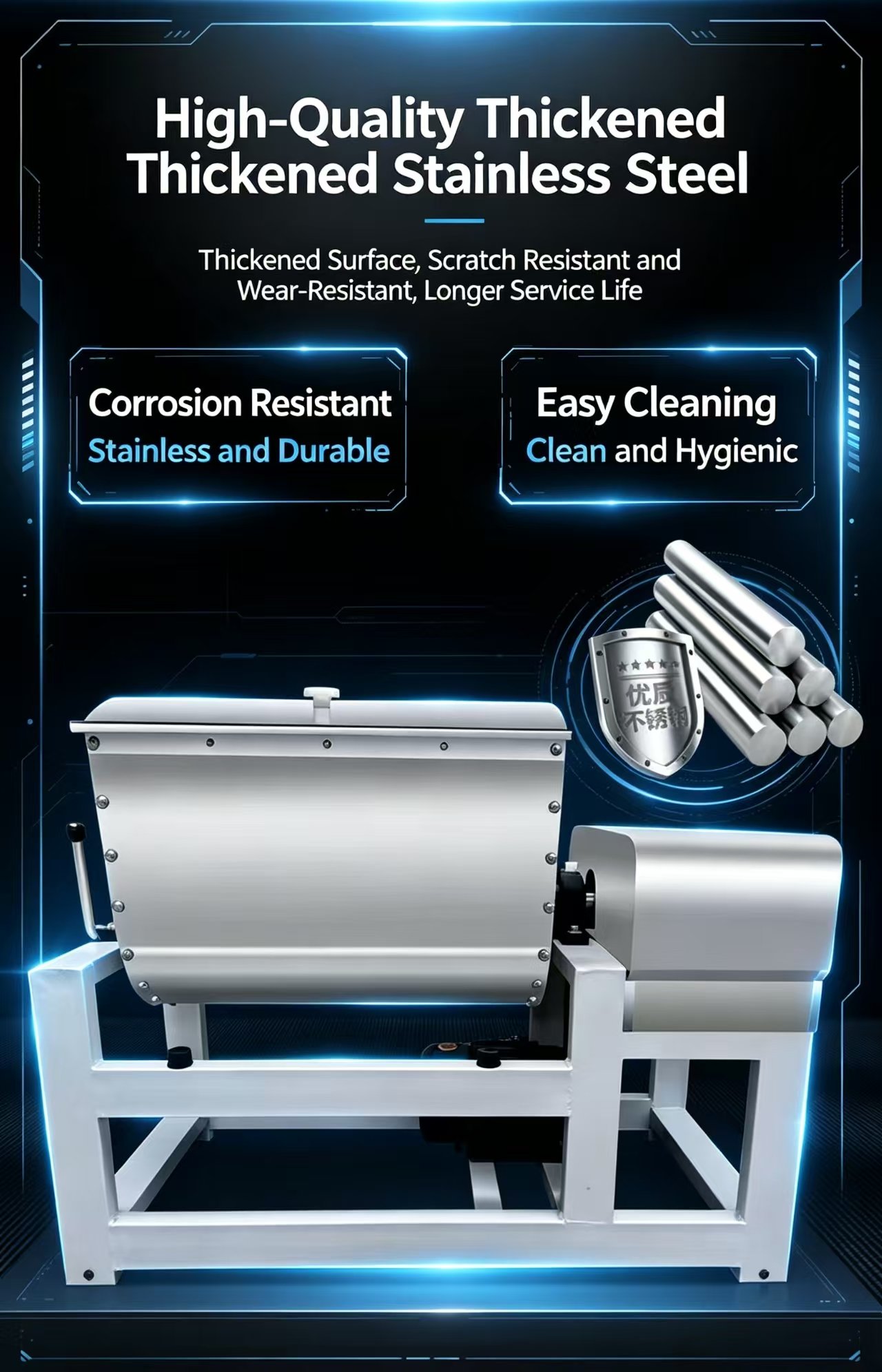
Commercial stainless steel dough mixers are ideal for scenarios where dough needs to be prepared from scratch. Its capacity covers 5kg to 50kg dry flour, which can meet the needs of different sizes such as noodle shops, bakeries and canteens. For example, the 15kg model is suitable for most noodle shops and bakeries, while the 50kg industrial model is used in central kitchens or food processing plants. The equipment integrates the functions of kneading, stirring, mixing and surface awakening. It simulates manual kneading through low speed and high torque (25-35 r/min minutes) to stimulate gluten network. The pure copper motor supports continuous operation, and the timer function (3–15 minutes) can be adjusted to suit different types of dough.
Segmenting machine: a precision tool for accurate quantification.
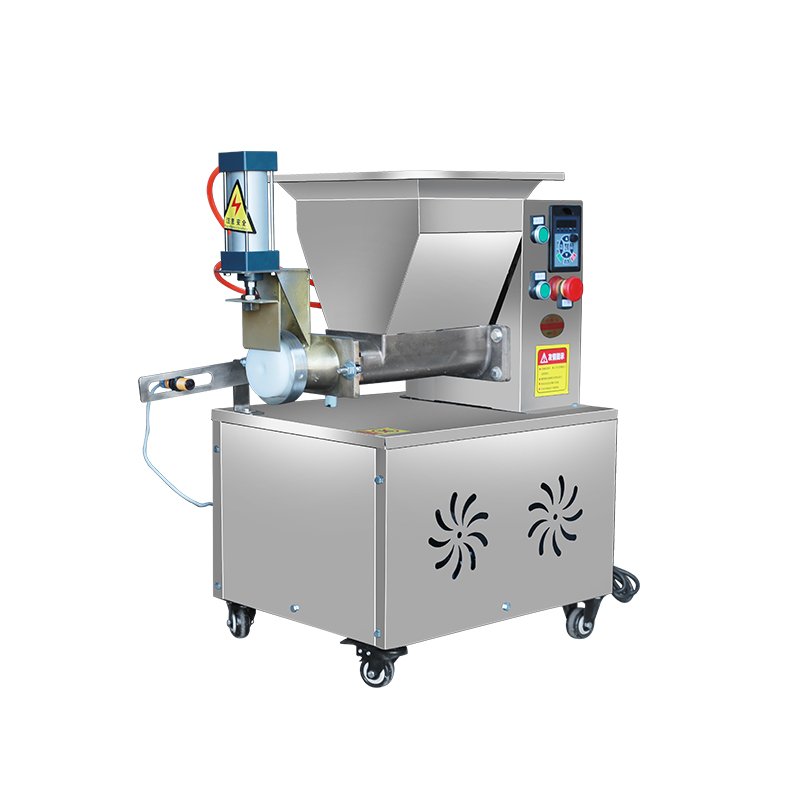
The automatic dough dividing and quantifying machine divides the kneaded dough into parts. It divides large pieces of dough into uniform small portions of 1g to 500g, and is suitable for the production of steamed buns, steamed buns, dumplings, moon cakes and the like that require standardized gram weight. The maximum production capacity is 150 parts per minute (9,000 parts per hour), and the weight deviation is controlled within 2g, which can replace 3-5 human workers. The double twisted dragon feeding system gently pushes the dough without damaging the gluten structure, especially suitable for high elastic dough and soft fillings.
Scene Summary
- Dough mixer: It is suitable for making dough from flour. It is the first step in the production of noodles, bread, steamed buns, etc.
- Divider: It is suitable for the link where the existing dough needs to be divided, and is often used for quantitative division before forming steamed buns, dumplings, moon cakes, etc.
- Combined use: In the complete production line, the two can be used in series-after the kneading machine completes the kneading, the dividing machine performs accurate division to improve the overall efficiency.
Technical comparison: core parameter analysis
The following comparison is based on common parameters to help you understand the technical characteristics of the two devices.
| Comparison dimension | Commercial stainless steel dough mixer | Fully automatic dough divider |
|---|---|---|
| Processing capacity | 5–50kg of dry flour per batch | 1-500g/part, up to 150 parts/min |
| Motor power | 0.75-3kW | 450-900W |
| Body material | 304/430 stainless steel | 304 food-grade stainless steel |
| Net weight | 35-150kg | 40-80kg |
| Rated voltage | 220/380V | 220V |
| Core features | Kneading, stirring, mixing, waxing | Precise quantitative segmentation |
Interpretation of Key Parameters
- Processing capacity: The dough mixer is measured by the weight of batch dry flour, which is suitable for batch preparation; the divider is measured by single weight and capacity, which is suitable for continuous division.
- Motor power: The dough mixer has high power (up to 3kW) and needs to drive large-capacity stirring; the splitter has low power (450-900W), but high precision requirements.
- Material: Both are made of food-grade stainless steel, but some models of the dough mixer use 430 stainless steel (luxury model), and the dividing machine is clearly 304 stainless steel.
- Voltage: The dough mixer supports 220V/380V and is suitable for different kitchen facilities. The splitter is only 220V, but its power consumption is low.
Selection recommendations: make decisions based on business needs
Priority purchase of dough mixer
- You need to make the dough from scratch using flour, and you don’t have any ready-made dough-mixing equipment.
- Your product line includes noodles, bread, buns and other categories that require different hardness dough.
- You want a piece of equipment to complete kneading, mixing, waxing and other functions, saving space and investment.
- Recommended model: 15kg model is suitable for most noodle shops and bakeries; 50kg model is suitable for canteen or central kitchen.
Situations where a slicer should be prioritized for purchase
- You already have a dough mixer, but the portioning process relies on manual labor, which is inefficient and uneven in weight.
- You produce products such as buns, dumplings, and mooncakes that require strict weight standards.
- You need to handle soft fillings (e. g., bean paste, mashed taro) and don't want to spoil their texture.
- Recommended models: pneumatic or mechanical, selected according to budget and accuracy requirements; 1g-500g range covers most noodles.
Combined purchase recommendations
For medium-sized or above pasta processing plants, it is recommended to equip both a dough mixer and a divider. The dough mixing machine is responsible for the preparation of dough at the front end, and the dividing machine is responsible for the accurate division at the back end, which can improve the overall efficiency by more than 30%. For example, a 15kg dough mixer with a splitter can process hundreds of kilograms of dough per hour to meet wholesale supply needs.
Frequently Asked Questions
Q: Can a dough mixer and a dough divider be used interchangeably?
Answer: No. The dough mixer is used to mix flour and water into a mass, and the divider is used to divide the kneaded dough into small portions of fixed weight. The two functions are complementary and cannot be replaced.
Q: My budget is limited, which one should I buy first?
Answer: If you currently rely entirely on hand-made dough, give priority to buying a dough mixer because it is the basis for dough making. If there is a dough mixer but the efficiency of dividing is low, the priority is to purchase the dividing machine.
Q: How accurate is the splitter?
Answer: The weight deviation of the dividing machine is controlled within 2g, which is far better than the manual error of 5-10%. For moon cakes, dumplings and other products with high requirements for gram weight, the quality consistency can be significantly improved.