Commercial stainless steel dough mixer vs full-automatic round rolling machine: purchase selection comparison guide
| Dimension | Commercial Stainless Steel Dough Kneading Mixer 5kg-50kg | Automatic Ball Shaping Machine | Analysis |
|---|---|---|---|
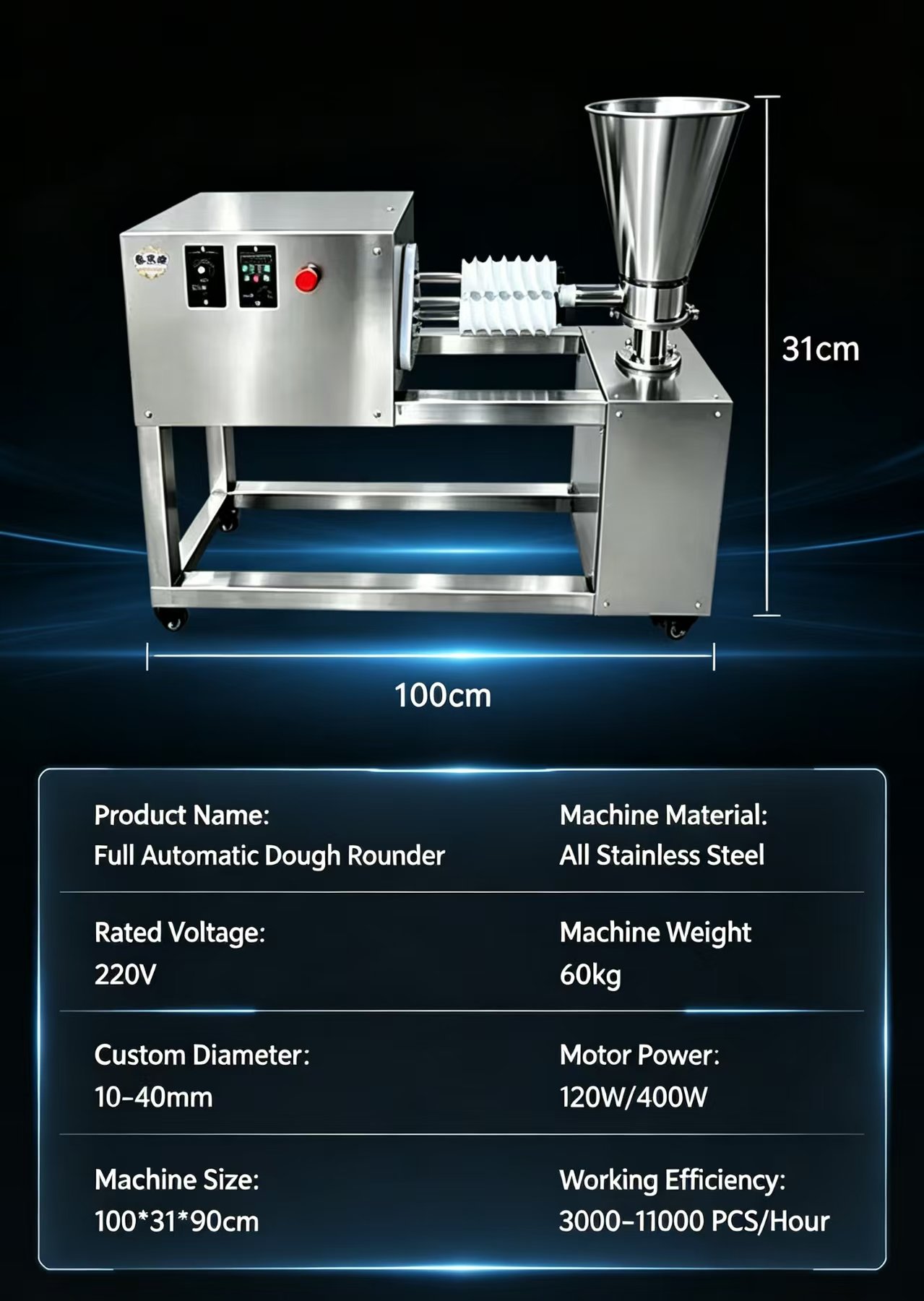
| Rated voltage | 220/380V | 220V | The dough mixer supports 220V and 380V, which is suitable for different kitchen power configurations; the round machine is only 220V, and the ordinary socket can be used without modifying the circuit. |
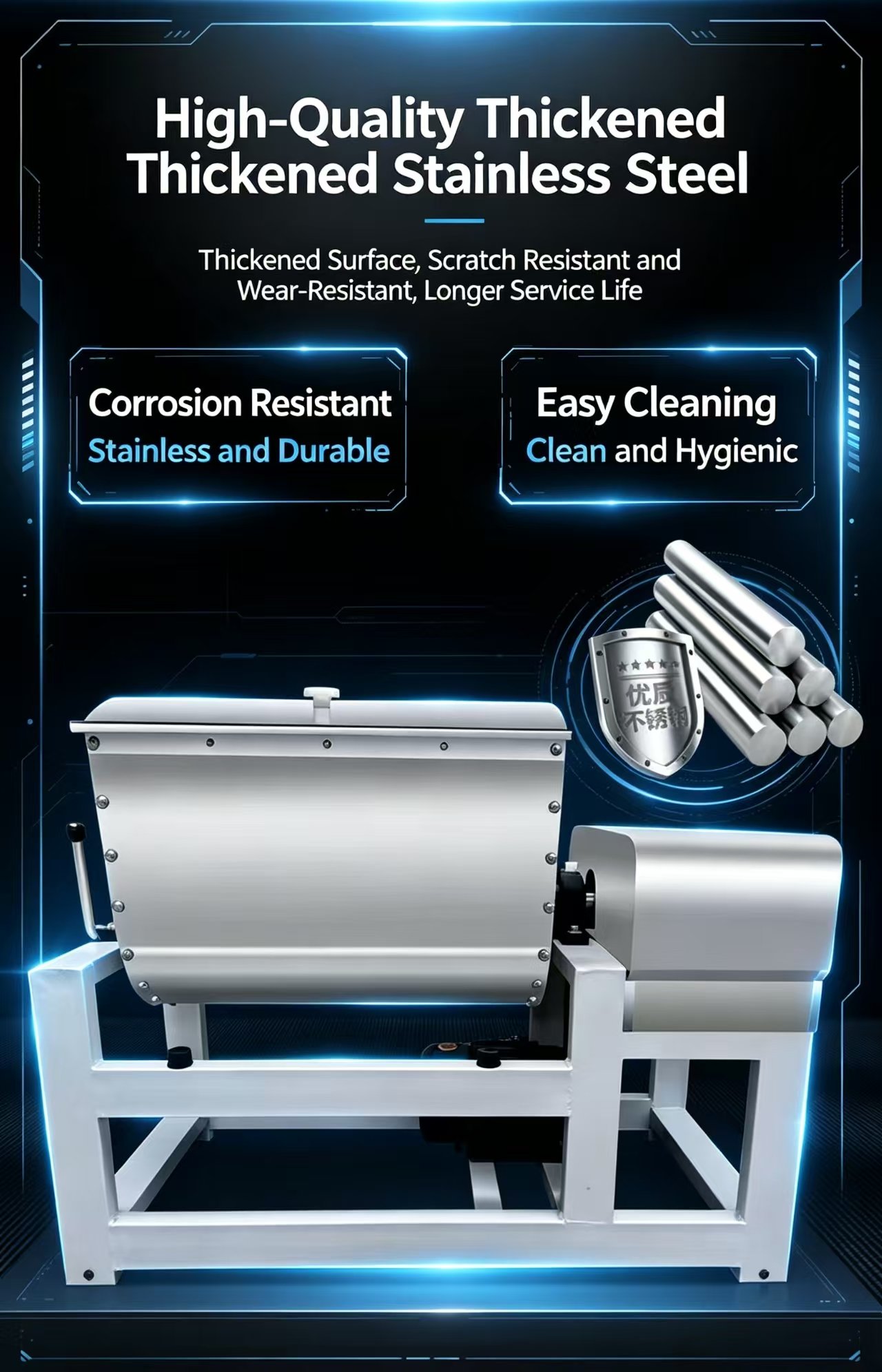
| Net weight | 35-150kg | 60kg | The weight of the dough mixer varies with the capacity, and the large model is heavier. The round rolling machine is unified at 60kg, with universal wheels at the bottom, making it easy to move. |
| After-sales service | 一年保修 | 质保一年 终身技术支持 | Both provide a one-year warranty, but the additional commitment to life-long technical support, long-term use is more secure. |
| Supply status | 在库存/定制可用 | 现货供应/支持定制 | Both support spot and custom, but the round machine clear spot supply, delivery cycle may be shorter. |
| Minimum order quantity | 1台 | 1台起订 | All support single order, suitable for small and medium-sized buyers flexible test order, reduce the procurement threshold. |
| Manufacturer’s experience | 11年食品机械 | 11年食品机械制造 | Both from 11 years of experience manufacturers, manufacturing experience, quality and reliability are guaranteed. |
Introduction
In the fields of noodle processing and spherical food shaping,Commercial stainless steel dough mixerwithFully automatic rounding machineThey are two types of core equipment. The former specializes in dough kneading, while the latter focuses on shaping spherical foods. Based on product data, this article provides an objective comparison across dimensions such as application scenarios, technical specifications, and selection recommendations, helping procurement professionals make informed decisions tailored to their business needs.
Differences in application scenarios
Commercial stainless steel dough mixer
Suitable for scenarios requiring large-scale dough kneading, such as chain noodle restaurants, steamed-bun and bun breakfast shops, bakeries, school and corporate cafeterias, central food processing plants, and mobile food trucks. Its core value lies in replacing manual dough kneading, ensuring consistent dough quality, and enabling integration with noodle presses, dough dividers, and other equipment to form a complete production line.
Fully automatic rounding machine
It is suitable for scenes that need to make raw materials into balls, such as breakfast chain stores (glutinous rice balls, hemp balls), health food processing workshops (sesame balls, hawthorn balls), bread baking workshops (dough cutting and rolling), quick-frozen food processing plants (meat balls, fish balls), taro paste egg yolk round production enterprises, glutinous rice products, vegetarian food processing enterprises, small catering start-up shops, school canteens and group meal supply, wine koji and traditional Chinese medicine processing plants, etc.
Technical Comparison
The two devices differ in the following shared parameters, which should be given particular attention during procurement:
| Parameter | Commercial stainless steel dough mixer | Fully automatic rounding machine |
|---|---|---|
| Rated voltage | 220/380V | 220V |
| Net weight | 35-150kg | 60kg |
| After-sales service | One-year warranty | One-year warranty, lifetime technical support. |
| Supply status | In stock/Customizable | In stock/Customization supported |
| Minimum order quantity | 1 unit | Minimum order quantity: 1 unit |
| Manufacturer’s experience | 11 years of food machinery | 11 years of food machinery manufacturing |
Selection recommendations
Select based on processing requirements:If you need to knead dough for noodles, bread, buns, and other products, you should choose a commercial stainless-steel dough mixer; if you need to shape ingredients into spherical forms, such as meatballs, sesame balls, or glutinous rice balls, you should opt for a fully automatic rounding machine.
Based on production capacity and site selection:The dough mixer is available in a range of capacities from 5kg to 50 kg, catering to different production scales; the rounding machine processes 1,100 to 3,000 pieces per hour, ideal for the mass production of spherical foods. Both support a 220V power supply, but the large-capacity model of the dough mixer may require 380V.
Select based on the level of automation:The dough mixer requires manual time setting and operation, while the rounding machine features one-button start and intelligent speed control, allowing even beginners to quickly get up to speed. If you prioritize ultra-simple operation, a dough rounding machine is the better choice; if you need flexible control over the kneading process, a dough mixer is more suitable.
Choose based on budget and return:Both can replace 2 to 5 workers and recoup the investment within 2 to 4 months. The price of dough mixers varies depending on capacity and power, and the dough rounding machines are available in 120W or 400W models. It is recommended to select a model that matches your daily processing volume to avoid underutilization of capacity.