Selection Guide for Bakery Noodles and Awakening Equipment: Scientific Procurement Plan from Noodles to Awakening
Scenario Pain Point Analysis: Why Does a Bakery Need Professional Equipment?
In the bakery’s production process, dough mixing and proofing are the key stages that determine bread quality. However, many buyers face the following pain points when selecting equipment:
- Poor dough consistency:Hand-kneading makes it difficult to ensure consistent gluten development, moisture content, and temperature across batches, resulting in an inconsistent bread texture.
- Inefficient: Manual surface, segmentation, and rounding are time-consuming and labor-intensive, making it difficult to meet peak production requirements.
- Difficult proofing controlAwakening time and temperature depend on experience, lack of standardized equipment, easy to cause excessive or insufficient fermentation.
- High labor costs: It is difficult to recruit skilled bakers, the training cycle is long, and the labor cost is rising year by year.
- Device mismatchThe capacity of the dough mixer is not compatible with the subsequent dividing and rounding equipment, resulting in inefficient process coordination.
To address these pain points, selecting a commercial-grade system that is efficient, precise, and durable is crucial. This guide will help you systematically evaluate and select the appropriate dough-mixing and proofing equipment for your bakery.
Key points of selection (Checklist)
1. Key Considerations for Flour-Mixing Equipment Selection
- Capacity MatchingSelect based on the average daily flour usage; common capacities range from 5kg to 50kg (dry flour input). Small bakery can choose 5-15kg, medium-sized 25-50kg.
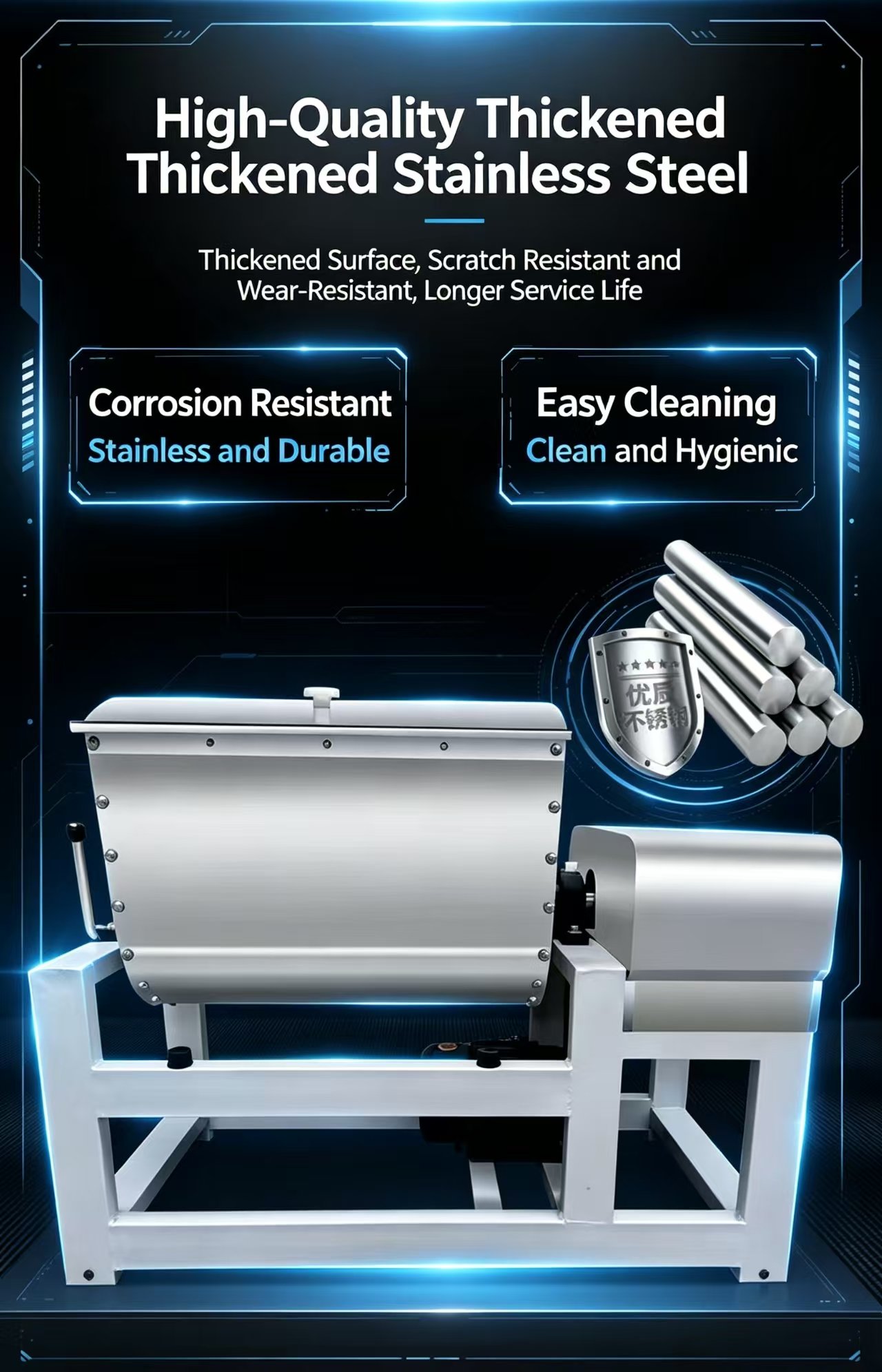
- Material and Hygiene: The mixing barrel must be 304 food-grade stainless steel, corrosion-resistant, easy to clean, and meet food safety standards.
- Motor performance: Pure copper motor has good heat dissipation and can work continuously. The power needs to be matched with the capacity (e.g. 5kg with 0.75kW and 50kg with higher power).
- Function integration: It is preferred to choose a multi-functional model that integrates kneading, stirring and awakening to save space and cost.
- Power adapter: Confirm the existing kitchen power supply (220V or 380V) and avoid modifying the circuit.
2. Key Points for Selection of Dough Segmentation and Rounding Equipment
- Quantitative accuracy: The division weight deviation shall be ≤ 2g to ensure the same size of the finished product.
- Capacity matching: According to the bakery peak output selection, such as 150 servings per minute can replace 3-5 human workers.
- Gluten protectionThe twin-screw feeding design gently handles the dough without damaging the gluten structure.
- Mold flexibilitySupports a range of 1g to 500 g, with quick mold changes to accommodate multi-variety production.
- Rounding uniformityThe rounding machine shall ensure that the finished products are smooth and uniform in size, with a yield rate of ≥99%.
3. Consideration of the wake-up phase
- Awakening equipment: Although this site does not provide a wake-up box, the integrated wake-up function of the dough mixer can assist basic wake-up. It is recommended to provide a professional wake-up box to accurately control temperature and humidity.
- Process coordination: Ensure that the production capacity of surface blending, segmentation and rounding equipment is matched to avoid bottlenecks.
Product recommendations and reasons
1. Commercial stainless steel dough mixer 5kg-50kg
Reason for recommendation: Specially designed for bakeries, the capacity covers 5kg to 50kg dry flour, which can meet the needs of small batch to large-scale production. Using 304 food grade stainless steel mixing barrel and pure copper motor, ensure the dough hygiene and equipment durability. Combines kneading, mixing, blending, and dough resting into one machine—multi-functional, saving space and reducing investment. Compatible with 220V/380V power supplies; no kitchen modifications required.
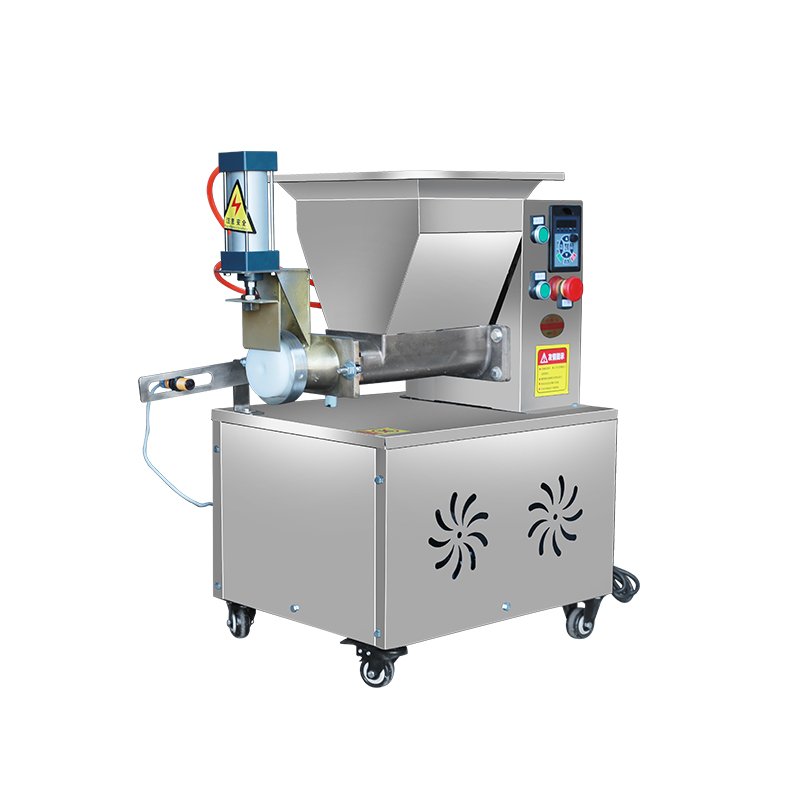
2. Commercial fully automatic dough divider and weigher, 1g–500g
Reason for recommendation: Accurate quantification, weight deviation ≤ 2g, to ensure the same size of bread, steamed buns and other products. Dual auger feeding protects the gluten, while photoelectric sensing ensures high cutting accuracy. With a production capacity of 150 servings per minute, it can replace 3–5 workers, significantly reducing labor costs. Support 1g-500g range, rapid mold change, adapt to multi-species production.
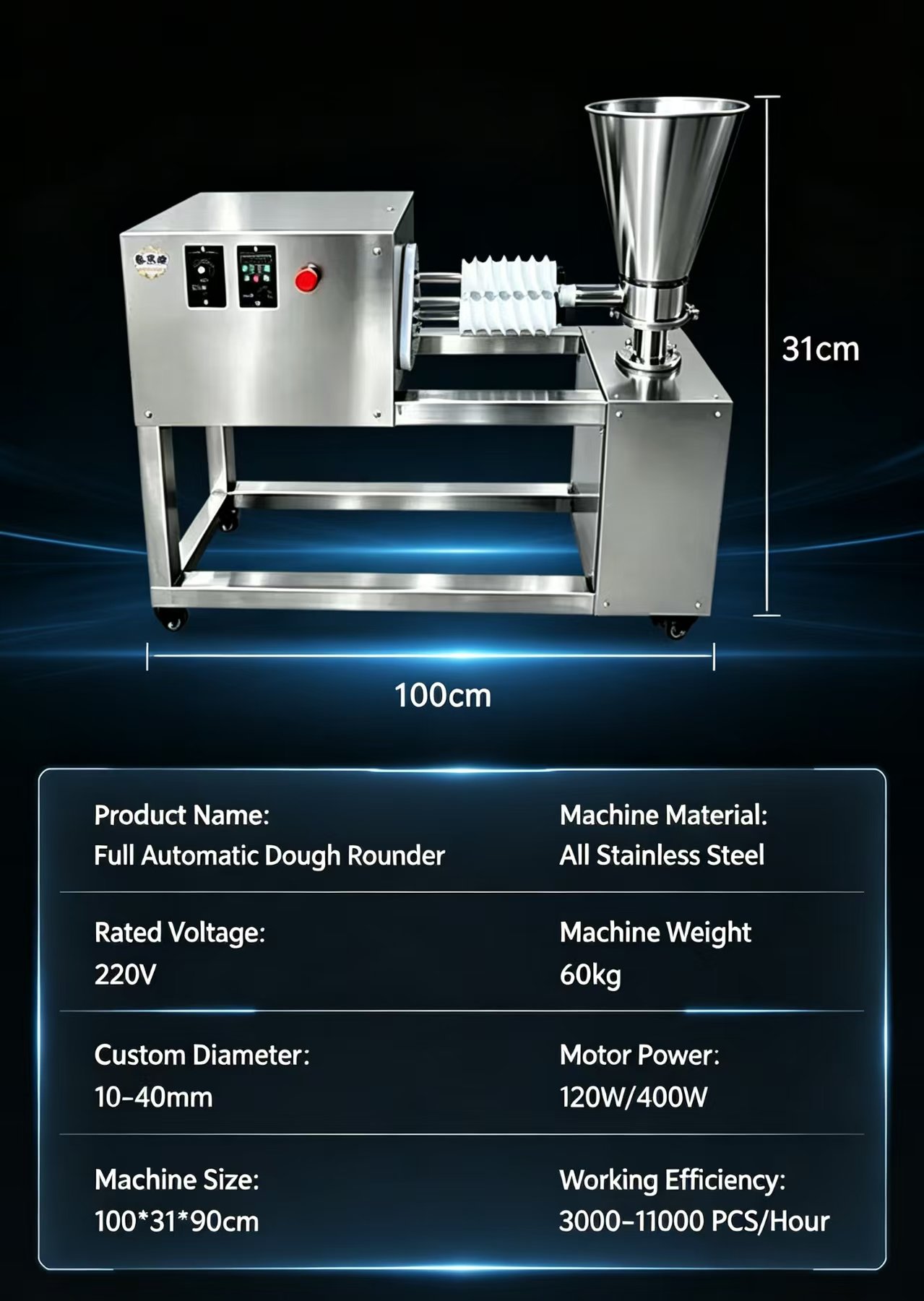
3. Full-automatic round rolling machine
Reason for recommendationSpecially designed for spherical food, suitable for bread dough, hemp ball, etc. Smart speed control, one-button operation—beginners can get started in just 10 minutes. Food-grade non-stick molds ensure smooth, uniform finished products with a yield rate of over 99%. Compact size, with universal wheel, easy to move, can be used by connecting 220V power supply.
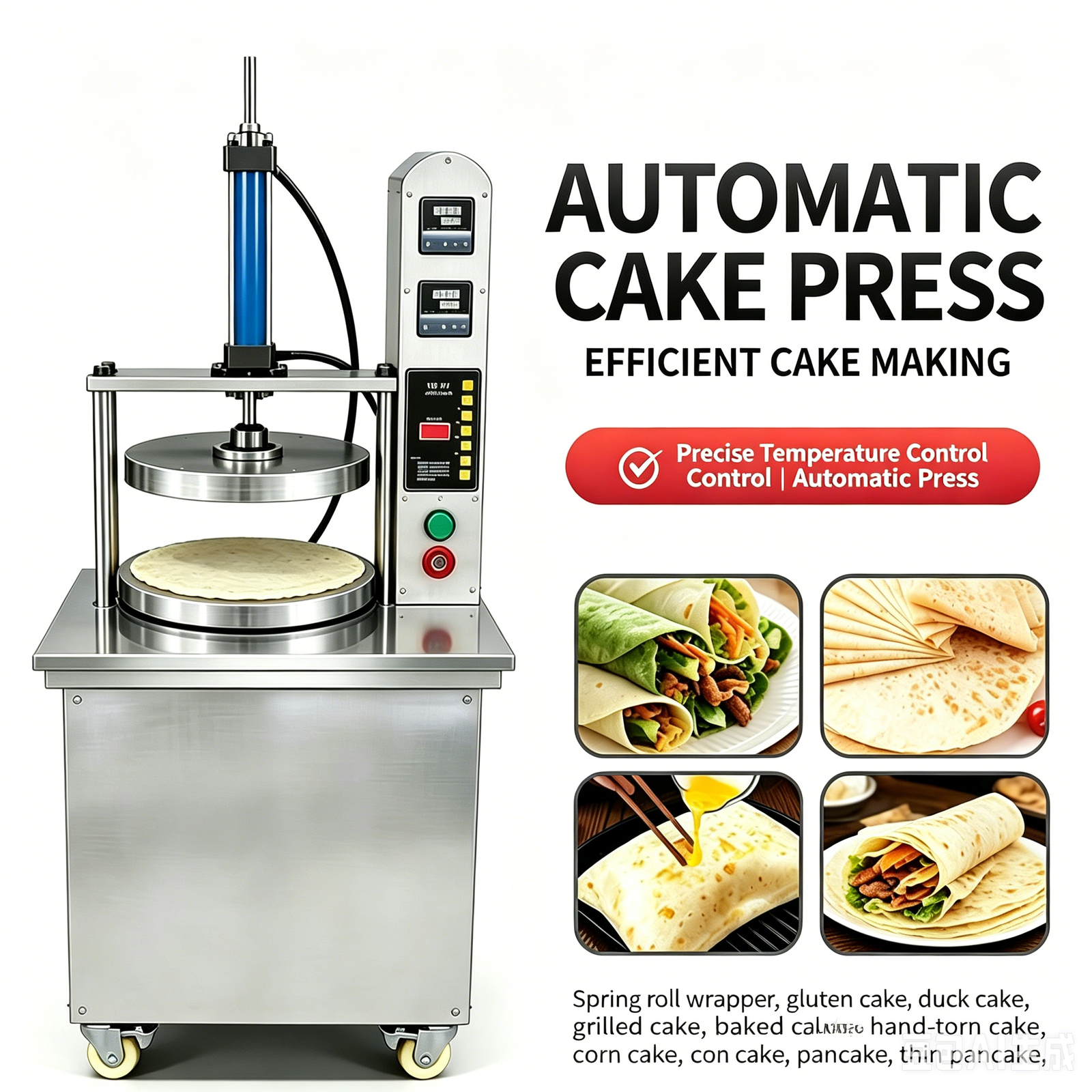
4. CNC hydraulic fully automatic commercial patty press machine
Reason for recommendation: Although it is mainly aimed at pressing cakes, its CNC control with precise thickness, temperature and time is also suitable for bakeries to make certain flat breads (such as pita cakes). Hydraulic pressure evenly, stable quality. Supports custom sizes from 5 to 40 cm, with a single machine capable of handling multiple menu options.
For bakeries, it is recommended to give priority to the combination of kneading machine, dividing machine and rounding machine to cover the whole process of kneading, dividing, rounding and awakening. If the product line contains flat bread, a cake press can be added.