Selection Guide for Biscuit and Pastry Production Line: One-stop Purchasing Scheme from Pressing to Rounding
Selection Guide for Biscuit and Pastry Production Lines
For biscuit and pastry manufacturers, the efficiency and stability of the production line directly determine the product quality and market competitiveness. Whether you’re establishing a new small-scale workshop or upgrading an existing facility, selecting the right equipment configuration is crucial. Based on real product data, this guide helps you build an efficient and reliable production line from cake pressing, dough kneading, segmentation to rounding.
Scenario pain point analysis
In the actual production of biscuits and pastries, buyers often face the following challenges:
- yield bottleneck: The output of manual or semi-automatic equipment is low, and it is difficult to meet peak season orders. For example, manual pressing can only produce dozens of cakes per hour.
- Unstable quality: Manual operation leads to inconsistent thickness, weight and shape, which affects the baking effect and product appearance. If the dough division deviation exceeds 5g, the pastry will vary in size.
- High labor costs: Relying on skilled technicians, recruitment and training are difficult, and personnel turnover affects production continuity.
- Poor device compatibilityMultiple devices operate independently, leading to poor process coordination, increased handling time, and greater space requirements.
- Cleaning and safetyFood grade material and easy to clean design is missing, easy to breed bacteria, does not meet the health standards.
Selection Checklist
To build an efficient biscuit pastry line, evaluate the equipment according to the following list:
- Capacity matching: Select equipment based on daily production targets, such as dough splitters that need to reach 150 parts per minute (9000 parts per hour) to match continuous production.
- Precision control: Pay attention to weight deviation (such as ≤ 2g) and thickness adjustable range (such as 5-40cm) to ensure product consistency.
- Material safety: All food contact parts must be 304 stainless steel, comply with FDA/EU standards, corrosion resistant and easy to clean.
- degree of automationPreferential choice of CNC or intelligent panel, reduce the dependence on skilled workers, new employees can quickly get started.
- Flexibility: The equipment should support multi-specification adjustment (such as changing molds and adjusting parameters) to adapt to different pastry categories.
- Power supply and site: Confirm the voltage (220V/380V) and size to ensure that it can be installed without large-scale modification.
- After-sales service: The supplier needs to provide technical support and spare parts supply to reduce downtime.
Product Recommendations and Reasons
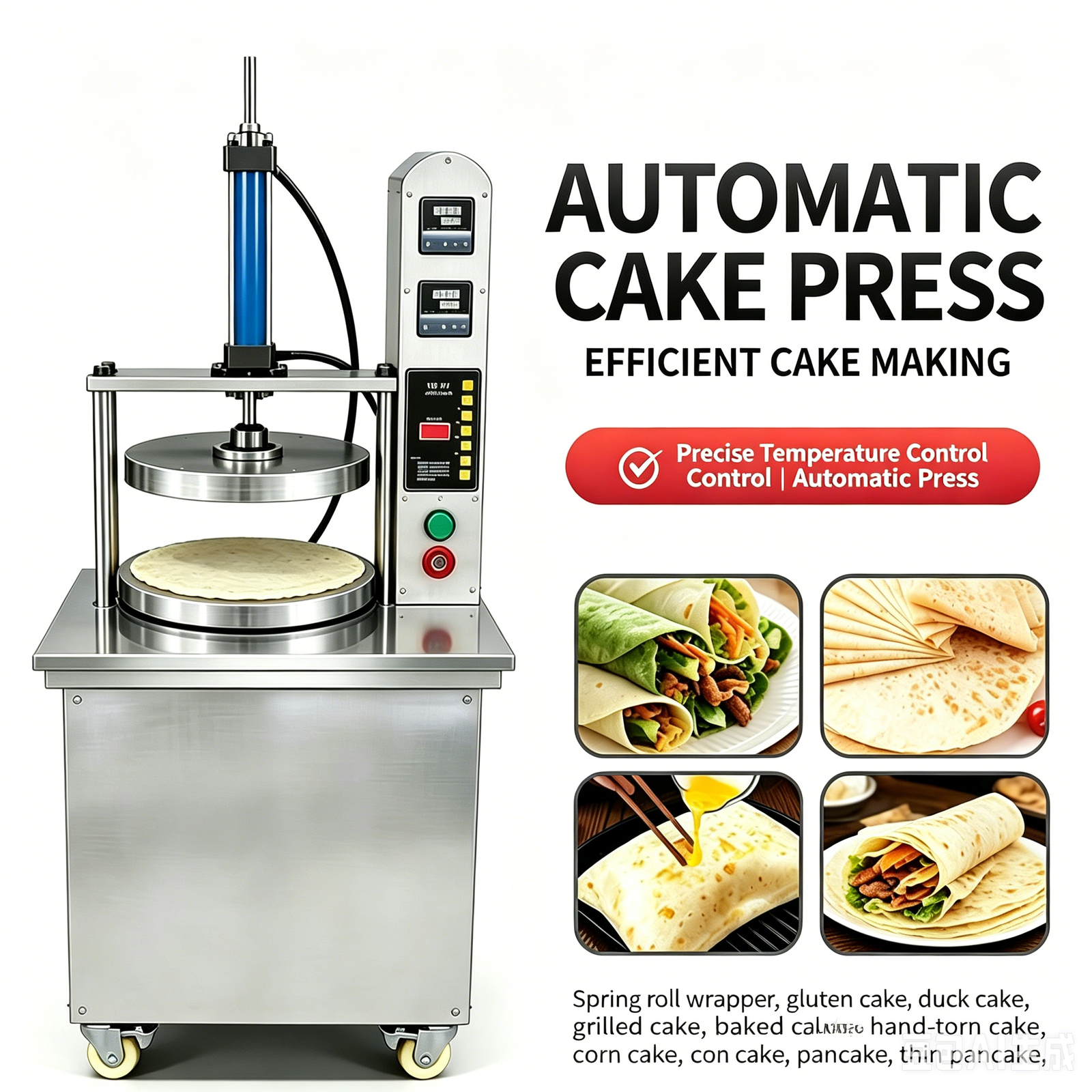
1. CNC hydraulic automatic commercial cake press
As the front-end core of the production line, the machine solves the problems of low output and uneven thickness of manual pressed cakes. Equipped with CNC numerical control system, can accurately adjust the thickness, temperature and time, new employees can operate in 10 minutes. Hydraulic pressure is applied evenly to ensure the consistent taste of each cake, supporting the size range of 5-40cm, and one machine covers a variety of products such as cakes, spring roll skins, taco cakes, etc. 304 food grade stainless steel body is durable and easy to clean. Standard version, professional version and industrial version are available to meet the needs of different scales. The return on investment is fast and can be paid back within months by saving labor.
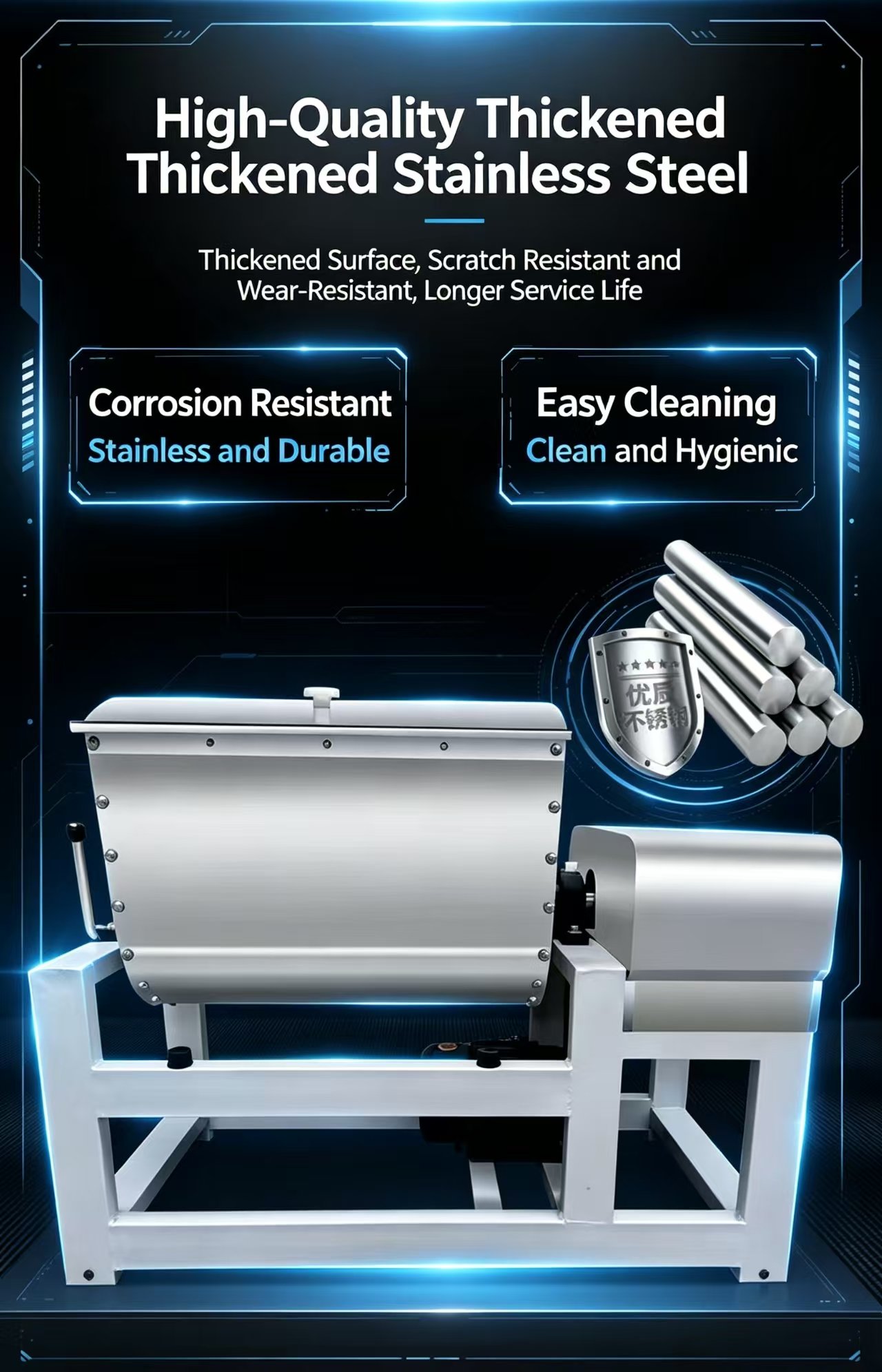
2. Commercial stainless steel dough mixer 5kg-50kg
Stabilizing the dough is the foundation of pastry quality. The dough mixer uses a thickened 304 stainless steel mixing barrel and a pure copper motor to simulate the effect of manual kneading to ensure the consistency of each batch of dough. Capacity from 5kg to 50kg dry flour, suitable for 220V/380V power supply, no need to transform the kitchen. It integrates kneading, stirring and awakening, saving space and money. Pure copper motors support peak continuous operation, excellent heat dissipation, and avoid the risk of burning. It is the first choice for bakeries and pastry factories.
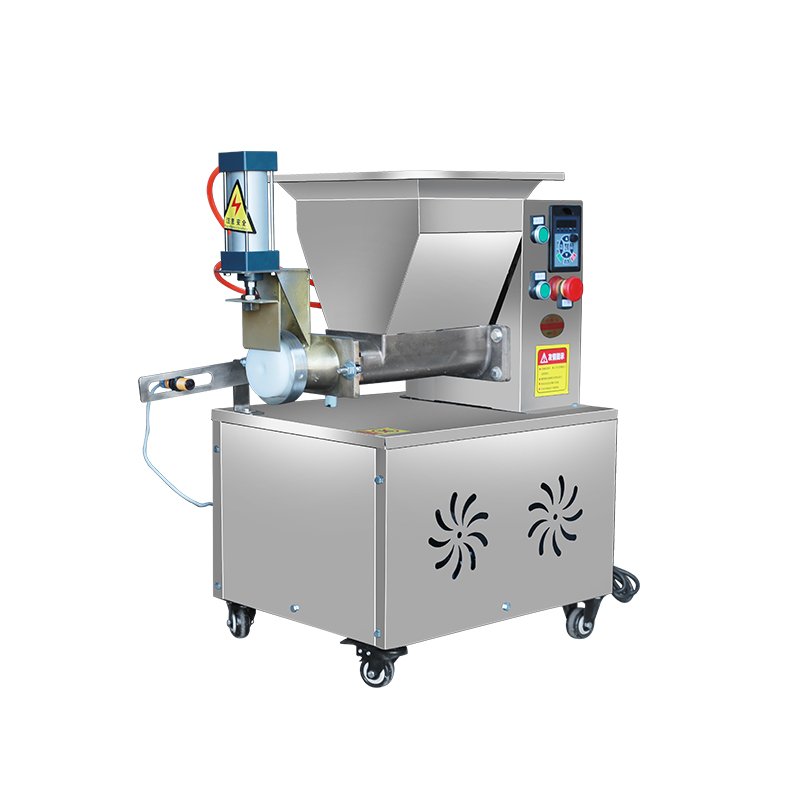
3. Commercial fully automatic dough divider and weigher, 1g–500g
Precise portioning is key to ensuring even-sized pastries. The machine adopts double twisted dragon feeding and light sensing cutting, the weight deviation is controlled within 2g, the maximum production capacity is 150 parts per minute, and can replace 3-5 human workers. The CNC frequency conversion control panel independently adjusts the parameters, quickly changes the mold to support the 1g-500g range, and switches different grams within 3 minutes. Suitable for steamed buns, steamed buns, moon cakes, pizza bottoms, etc. The compact design is suitable for any commercial kitchen, significantly improving efficiency and reducing loss.
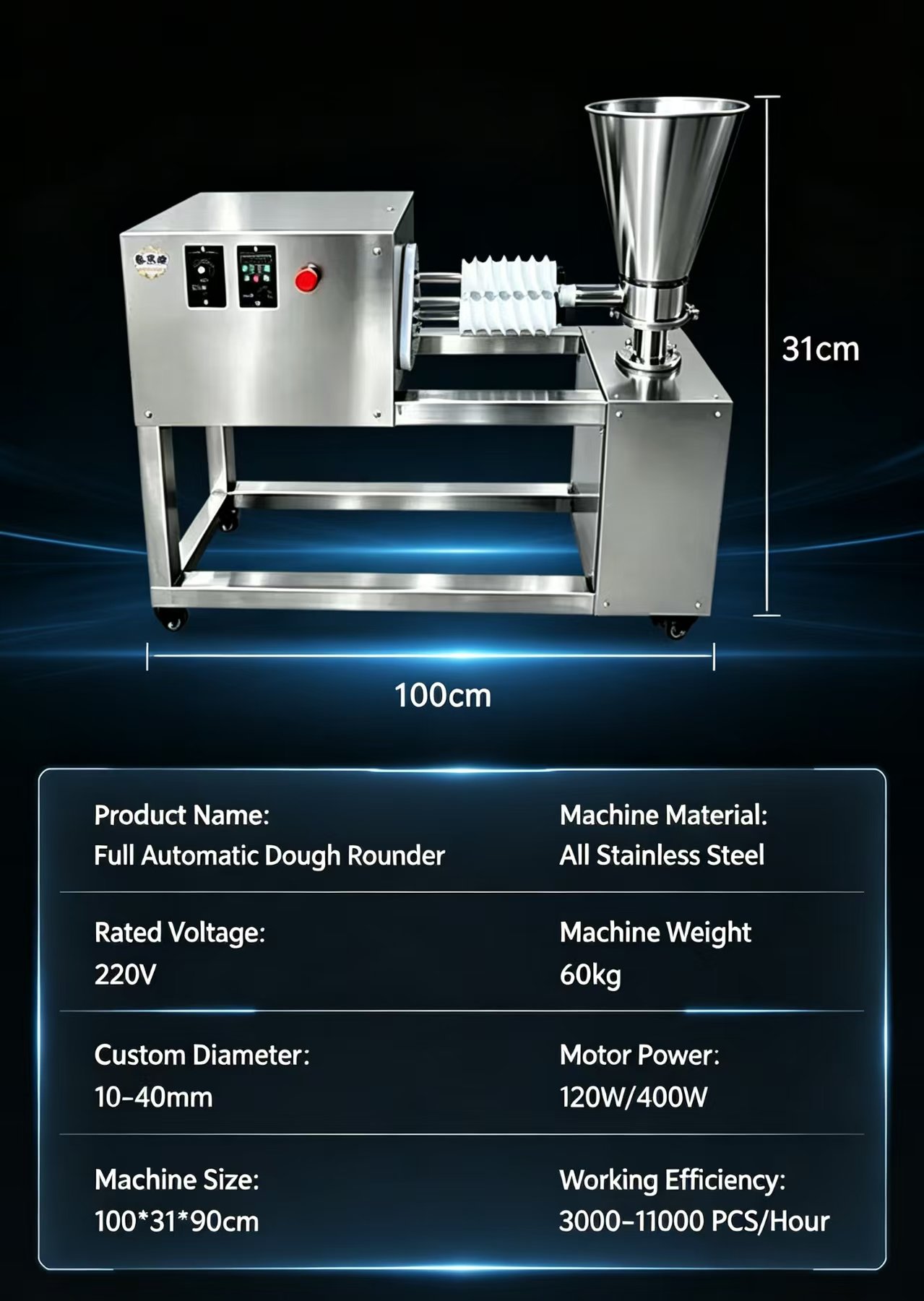
4. Full-automatic round rolling machine
For spherical cakes such as hemp balls and sesame balls, the machine can automatically divide and rub circles, producing 1100-3000 grains per hour with an adjustable diameter of 10-40mm. The food-grade non-stick mold ensures that the finished product is round and smooth, with a yield of more than 99%. Intelligent speed control one-key operation, novice 10 minutes to get started, 120W/400W dual power optional, low noise. The stainless steel body of the whole machine, the universal wheel at the bottom is easy to move, and it can be produced by connecting the 220V power supply. It is an ideal choice for snack workshops and pastry shops.
Summary
When constructing biscuit and pastry production line, priority should be given to the capacity matching and automatic connection between equipment. The above four devices are based on real data, covering the key links from surface kneading, cake pressing, segmentation to circle rubbing, helping you improve efficiency, stabilize quality and reduce labor costs. Before placing a purchase order, please communicate your customization requirements in detail with the supplier based on your production volume, facility space, and budget.