CNC hydraulic fully automatic commercial cake presses and squat cake presses: core differences and selection recommendations
In the food processing industry, bread presses are key equipment for producing pasta such as Indian pancakes, Mexican tortillas, and Middle Eastern pita bread. Faced with two mainstream models on the market—CNC hydraulic fully automatic commercial cake presses and traditional squat cake presses—buyers often find themselves in a dilemma of choice. This article will compare dimensions such as working principle, production efficiency, degree of automation, and maintenance costs to help you make informed decisions based on your actual production needs. Whether you're a small workshop or a large central kitchen, understanding these differences can optimize your return on investment.
1. Comparison of working principle and structure: CNC hydraulic vs. squat type
CNC hydraulic fully automatic cake pressing machine Using a computer numerical control (CNC) system and hydraulic drive, standardized production of dough cakes is achieved by precisely controlling pressure, time, and temperature. Its core advantages lie in:
- precise pressure control The hydraulic system can provide a stable pressure of up to several tons, ensuring the consistent thickness of each cake and avoiding uneven thickness caused by manual operation.
- Fully automated process From feeding and pressing to output, the entire process requires no manual intervention and can be integrated into automated production lines.
- Materials and Processes It typically uses a stainless steel body, meets food hygiene standards, and has wear-resistant and durable hydraulic components, making it suitable for high-intensity continuous operation.
squat type cake press (Also known as manual cake pressing machine) relies on manual operation of levers or pedals to generate pressure, has a simple structure and low manufacturing cost. Its features include:
- High dependence on manual labor The pressure and time of each cake are controlled by the operator, resulting in poor product consistency and high labor intensity.
- Limited production capacity It is suitable for small-batch and multi-variety production, but it is difficult to meet the needs of large-scale continuous production.
- Low initial investment The device typically costs only a fraction of the price of fully automated models, making it suitable for startups or scenarios with limited budgets.
For buyers seeking standardization and large-scale operation, CNC hydraulic fully automatic models are a better choice; Squat models, on the other hand, are suitable for flexible scenarios with small output and a wide variety of products.
2. Capacity and Efficiency: Quantitative Comparison
Production capacity is a core indicator for procurement decisions. Taking the production of a cake with a diameter of 15cm and a thickness of 3mm as an example:
- CNC hydraulic fully automatic cake pressing machine : Can produce 1200-2000 cakes per hour (depending on model and configuration) and can run continuously for 24 hours. The automated loading and unloading system further reduces downtime, and the overall equipment efficiency (OEE) can reach over 85%.
- squat type cake press The hourly output is about 200-400 sheets. Due to the operator's physical limitations, they usually need to rest every 2 hours. The actual daily output capacity is less than 1/5 of that of the fully automatic model.
In addition, the CNC model can quickly switch the thickness and size of different cakes through the program storage function, and the model change time is only a few minutes; Squat models, on the other hand, require manual mold adjustments, which is time-consuming and inaccurate. For central kitchens or chain restaurants that require a daily output of more than 5,000 sheets, fully automated models can significantly reduce unit labor costs. For example, a fully automated production line only requires 1-2 operators to monitor, while a squat model with the same output requires 6-8 workers.
3. Automation and Integration Capabilities: Production for the Future
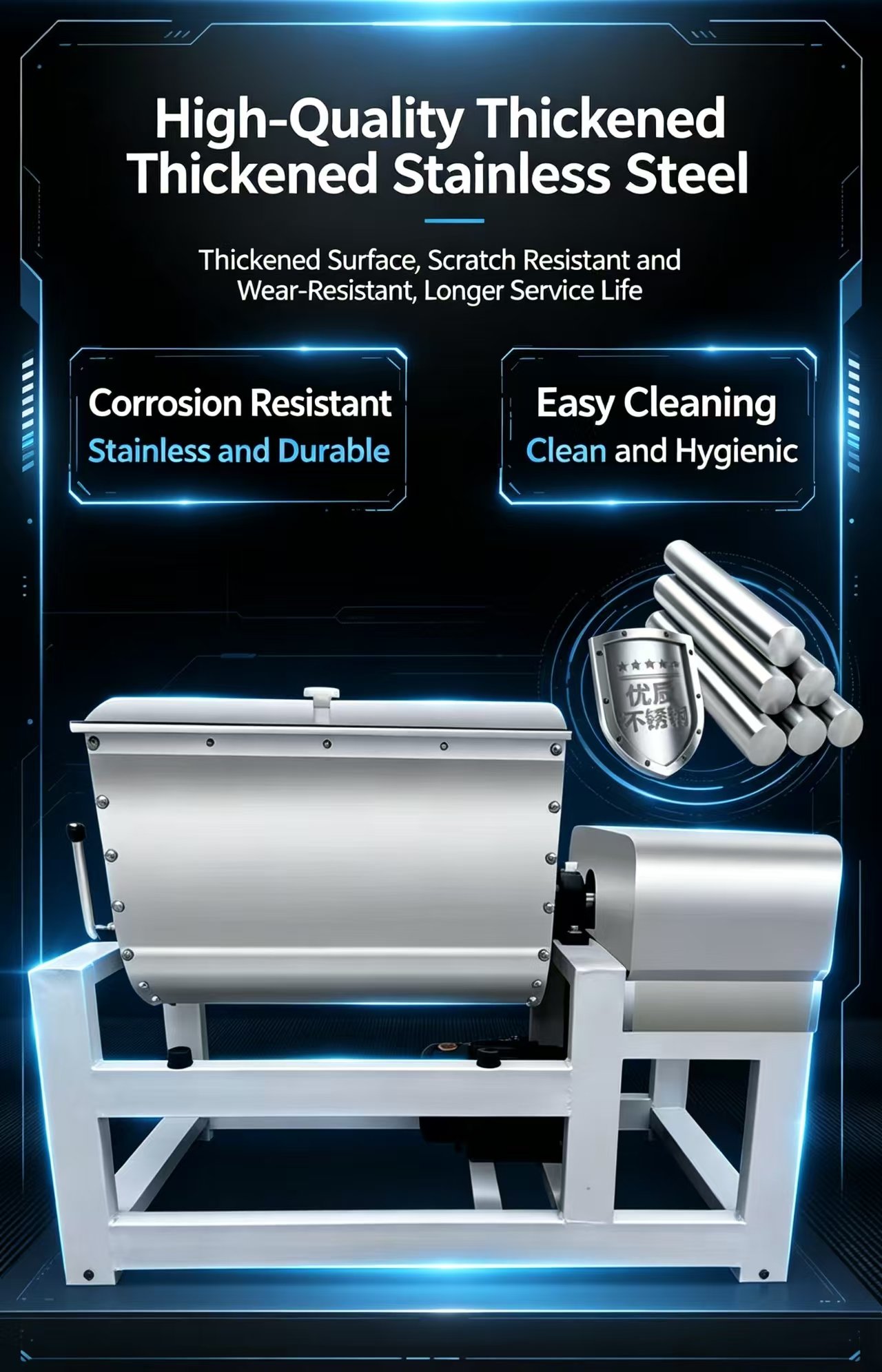
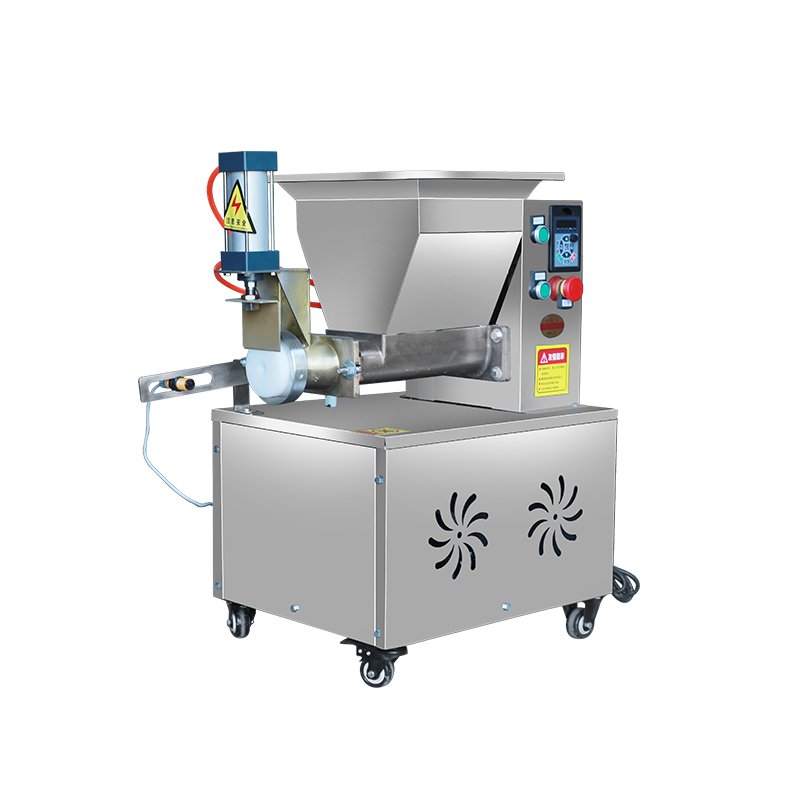
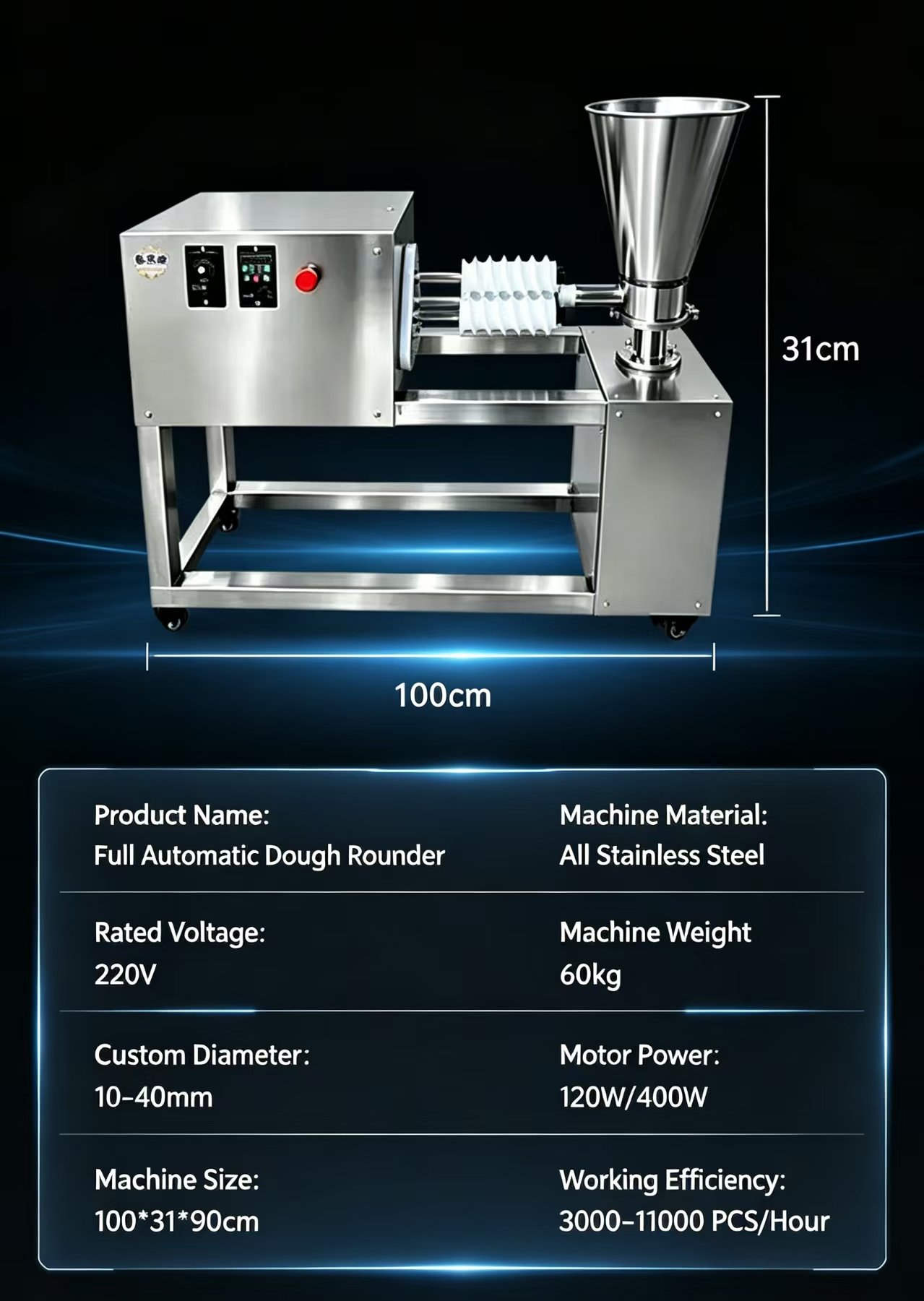
Modern food factories are moving towards automated assembly lines, and CNC hydraulic fully automatic cake presses are designed with integrated interfaces that can be used with... commercial stainless steel kneading machine 、 Fully automatic dough dividing and quantifying machine 、 Fully automatic rounding machine The equipment works together to form a complete production line from dough kneading, cutting, rounding to cake pressing. This integration not only improves efficiency but also reduces the risk of human contamination, meeting the requirements of food safety systems such as HACCP.
Squat-type cake presses, on the other hand, operate independently and are difficult to integrate into automated processes. Fully automated models are more scalable if your long-term plans include capacity expansion or product standardization. We offer a variety of capacity configurations. CNC hydraulic fully automatic commercial cake pressing machine And can customize production line solutions according to customer needs.
4. Cost Analysis: Initial Investment vs Total Cost of Ownership
Procurement costs need to comprehensively consider the initial price and long-term operating costs:
- Initial Investment CNC hydraulic fully automatic cake presses typically cost between $20,000 and $80,000 (depending on capacity and configuration), while squat models cost only $2,000 to $5,000.
- Labor costs Taking Southeast Asia as an example, workers earn about $300 a month. The fully automatic model can save 5 workers, saving $18,000 per year, and the price difference can be recovered in 2-3 years.
- Maintenance and Energy Consumption The fully automatic model uses high-quality hydraulic components, and the annual maintenance cost is approximately 3%-5% of the equipment price; The squat model has simple structure, low maintenance cost but frequent replacement. In terms of energy consumption, fully automatic models have lower energy consumption per unit of product due to continuous operation.
- scrap rate Fully automatic models have high product consistency and a scrap rate of less than 1%; Due to human factors, the scrap rate of squat-type machines can reach 5%-10%, and the long-term accumulated losses cannot be ignored.
For businesses planning long-term operations, fully automated models offer a greater advantage in terms of total cost of ownership (TCO). You can refer to Industry News Check out our cost analysis case studies, or contact us for customized ROI calculations.
5. Selection Decision Guide: Matching based on business scenarios
How to choose? It is recommended to evaluate from the following dimensions:
- Production demand With a daily output of less than 2,000 sheets and a wide variety of products, the squat model is more flexible; With a daily output of over 5,000 sheets, fully automatic machines are an inevitable choice.
- Degree of product standardization If customers have strict requirements regarding the thickness and diameter of the cake, the CNC hydraulic press model can ensure consistency; Conversely, handcrafted style products can retain the squat technique.
- Labor availability In areas with high labor costs or difficulty in recruiting workers, fully automated machines can reduce reliance on skilled workers.
- Future Expansion Plans If you plan to increase production lines or enhance competitiveness through automation, priority should be given to fully automated equipment that can be integrated.
In addition, consider the compatibility of the equipment with existing surface and division equipment. For example, commercial stainless steel kneading machine The capacity should be coordinated with the production capacity of the cake press to avoid bottlenecks.
sum up
CNC hydraulic fully automatic commercial cake presses are significantly superior to squat cake presses in terms of production capacity, consistency, automation level, and long-term cost, making them suitable for food production enterprises that pursue large-scale and standardized operations. Squat models, on the other hand, meet the needs of small-batch, flexible production with a low barrier to entry. Procurement decisions should be based on a comprehensive weighing of production targets, product positioning, and investment budget. We recommend that the purchaser inspect the equipment in person and request sample testing to verify its actual performance. For further information on equipment parameters or to obtain a quote, please visit our product page or consult our sales team.