Quick Start Guide for CNC Hydraulic Fully Automatic Commercial Bread Press: Key Points for Procurement, Selection and Operation
If you are searching "CNC hydraulic fully automatic commercial pancake press quick start guide" It is likely that you have already purchased or are planning to purchase a hydraulic cake press for mass production of cakes. This article will take a procurement perspective to outline the core parameters, selection points, quick start steps, and budget references for this type of equipment, helping you start production efficiently and avoid common pitfalls.
1. What is a CNC hydraulic fully automatic cake press? Core Advantage Analysis
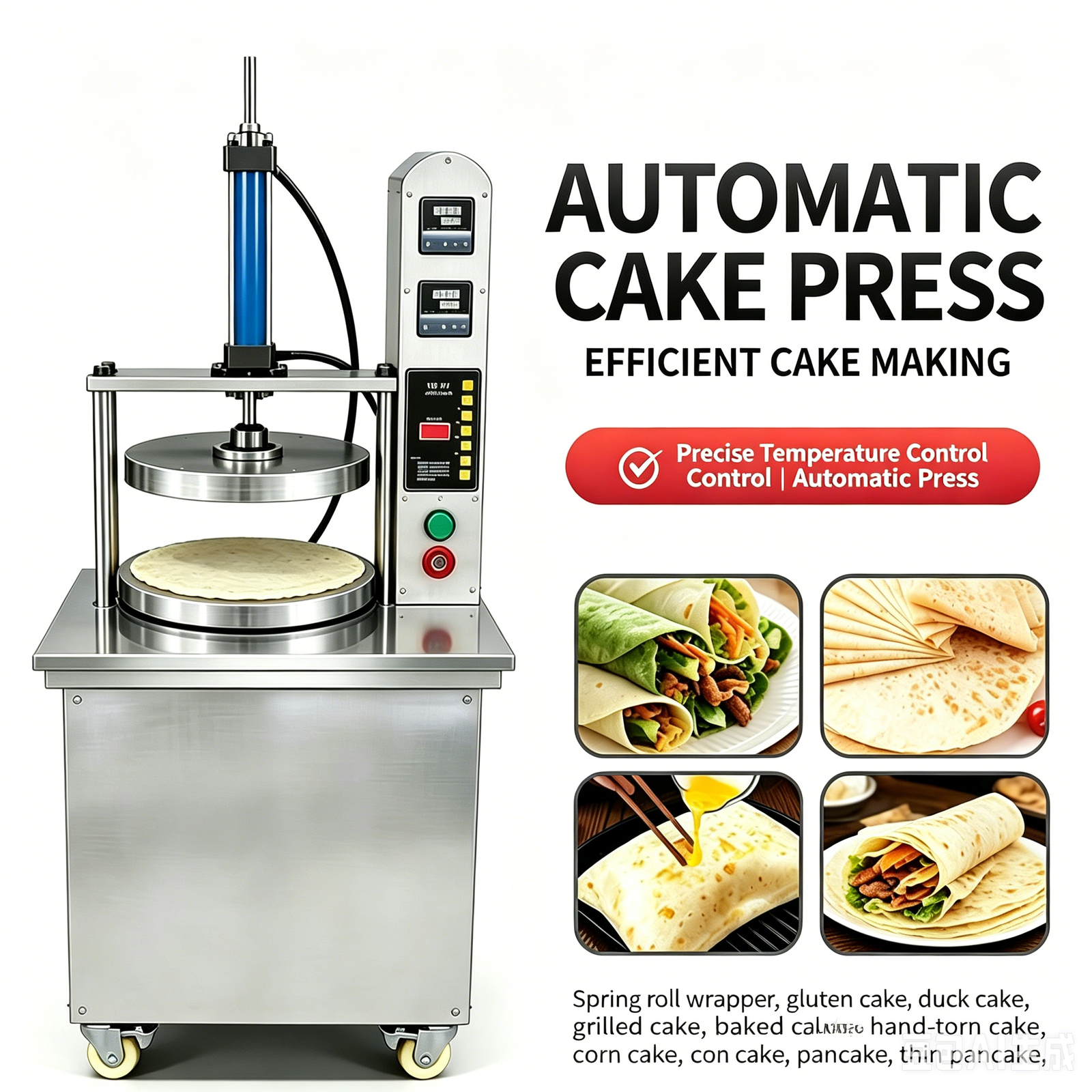
The CNC hydraulic fully automatic commercial cake press uses a combination of computer numerical control (CNC) and hydraulic systems to automatically complete processes such as dough quantification, pressing, and demolding. Compared to traditional manual or semi-automatic equipment, its advantages are:
- Precise and controllable pressure The hydraulic system provides stable pressure to ensure consistent thickness and density of each cake.
- High productivity Depending on the model, it can produce 300-1200 pancakes per hour, making it suitable for central kitchens, chain restaurants, and food processing plants.
- rapid mould change The molds can be replaced to produce pancakes of different sizes and shapes (such as spring pancakes, roast duck pancakes, Mexican pancakes, pie crusts, etc.).
- Easy to operate CNC panel preset parameters, one-click start, reducing dependence on skilled workers.
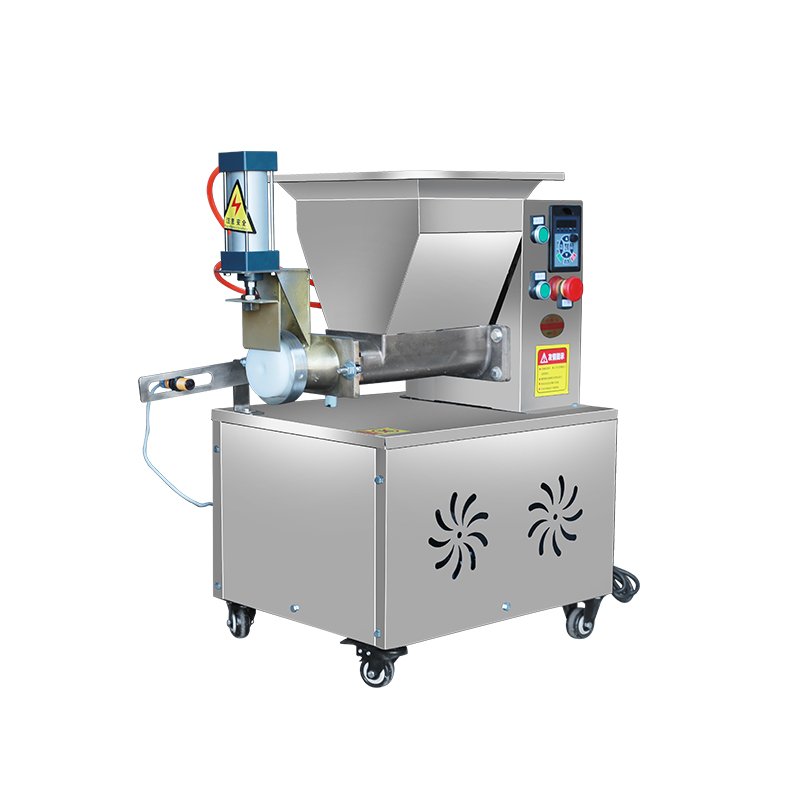
If you also need front-end dough handling equipment, it can be combined with... commercial stainless steel kneading machine and Fully automatic dough dividing and quantifying machine To form a complete production line.
II. Procurement Selection: 5 Key Parameters and Configuration List
When purchasing a CNC hydraulic fully automatic cake press, please pay close attention to the following parameters:
- Production capacity (sheets/hour) : Choose according to your daily output requirements. Small restaurants can choose 300-500 sheets per hour, while medium-sized food factories recommend 800-1200 sheets per hour.
- Cake blank diameter and thickness range : Common diameter 5-30cm, thickness 1-10mm adjustable. Verify that the equipment supports your required product specifications.
- hydraulic system pressure : typically 5-20 tons. The greater the pressure, the firmer the cake, but it needs to match the dough characteristics.
- control system : CNC touch screen, supports storing multiple sets of recipes, facilitates quick product switching.
- Materials and hygiene standards Food contact parts must be made of 304 stainless steel and comply with HACCP requirements.
Recommended configuration list: Press machine main unit + automatic dusting device (non-stick) + conveyor belt + mold set. For a complete production line, please refer to Our production line configuration solutions 。
III. Quick Start Guide: 6 Steps from Unboxing to the First Pie
After receiving the equipment, follow these steps to quickly start production:
- Step 1: Inspection and installation Confirm that the equipment is free from transportation damage, place it on horizontal ground, and connect it to a power source (usually 380V three-phase) and an air source (if necessary).
- Step 2: Cleaning and Lubrication Wipe the contact surfaces with food-grade cleaning agent, check the hydraulic oil level, and lubricate the moving parts according to the manual.
- Step 3: Parameter settings Enter the billet diameter, thickness, pressure, and pressing time on the CNC panel. It is recommended to use the default parameters for the first time.
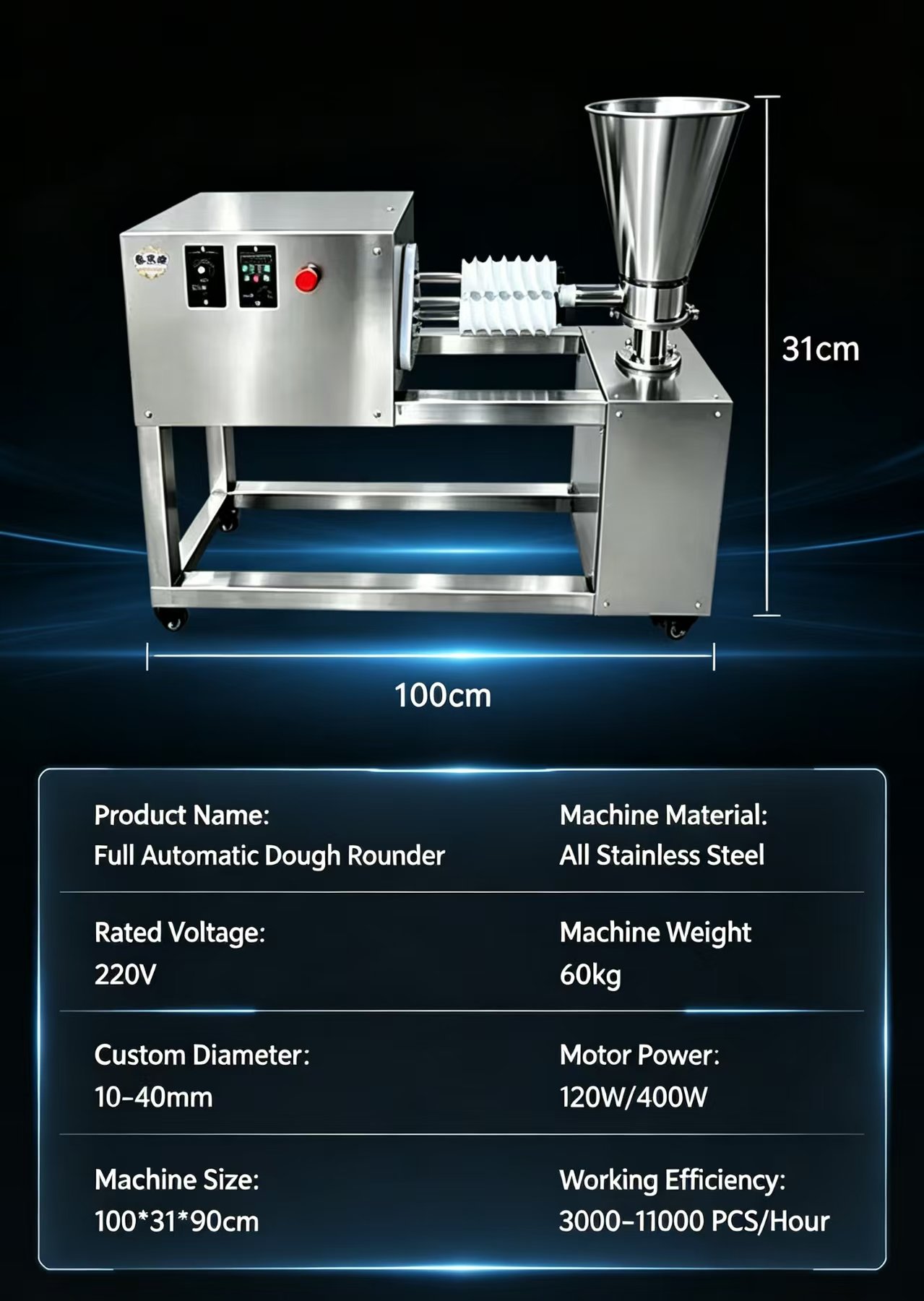
- Step 4: Dough Preparation The dough moisture content is controlled at 40%-50%, and it is divided into dosage forms that match the mold. Can be used Fully automatic rounding machine Improve efficiency.
- Step 5: Pressure test and adjustment : Add a dosage, start a single cycle, and check the cake blank forming effect. Fine-tune the pressure or time until satisfactory.
- Step 6: Mass Production Switch to automatic mode, and the device will continue to operate. Regularly check the quality of the cake blanks and replenish the dough in a timely manner.
IV. Cost and Budget Reference
The price of CNC hydraulic fully automatic commercial cake presses is affected by production capacity, brand, and configuration. Based on current market conditions:
- Entry level (300-500 sheets/hour) : Approximately $8,000-$15,000.
- Mid-range (600-900 sheets/hour) : Approximately $18,000-$30,000.
- High-end (1000 sheets/hour or more) : Approximately $35,000-$60,000.
In addition, mold costs ($500-2,000 per set), installation and commissioning, and shipping costs need to be considered. It is recommended to request a detailed quotation from the supplier and confirm after-sales support.
V. Common Procurement Traps and Avoidance Suggestions
- Falsely labeled capacity Suppliers are required to provide actual test videos or live demonstrations.
- Poor mold compatibility Confirm whether mold replacement is convenient and whether it can be customized.
- After-sales defects : Choose a brand with a local service team or remote support.
- Ignore dough compatibility Different doughs (such as high gluten and low gluten) have different pressure requirements. Samples should be sent for testing before purchase.
sum up
CNC hydraulic fully automatic commercial cake presses are key equipment for improving the production efficiency of cake foods. By clarifying your capacity needs, focusing on core parameters, following the quick start steps, and avoiding common procurement pitfalls, you can successfully go into production and achieve stable returns. For more equipment selection advice, please browse our Product Center or Industry News 。