CNC Hydraulic Fully Automatic Commercial Cake Press Installation Guide: 5 Key Parameters and Budget References
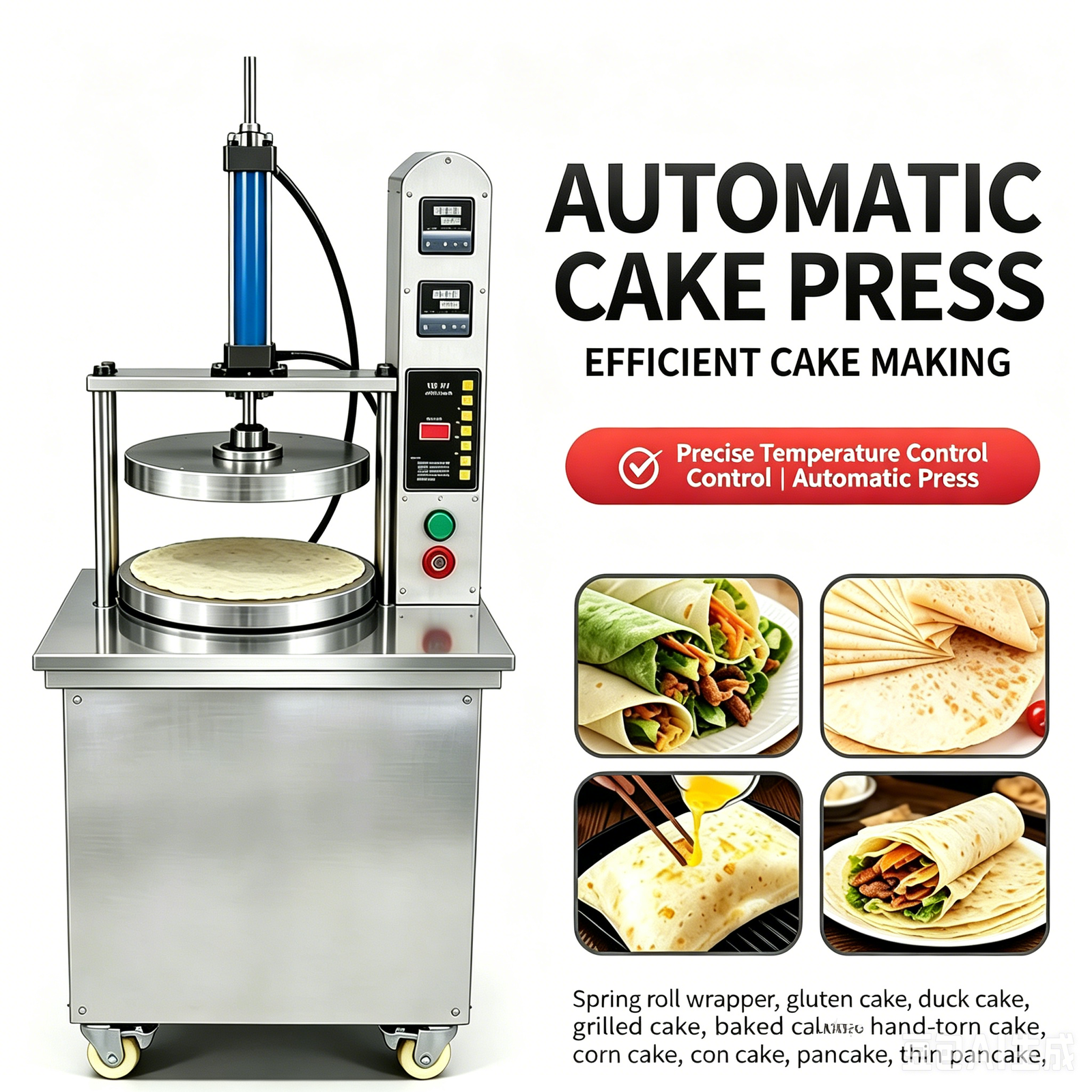
For food processing plants or central kitchens planning to introduce automated pastry production lines, the setup of a CNC hydraulic fully automatic commercial pastry press is a key step in determining production efficiency. This article directly answers the question that buyers are most concerned about: How to properly install and commission the equipment? What parameters should we pay close attention to? How is the budget planned? Based on industry experience, we have compiled five core parameters and installation points to help you avoid common pitfalls and achieve rapid production.
1. Site and power preparation before installation: voltage, air source, and foundation
CNC hydraulic fully automatic commercial cake presses typically use a 380V three-phase power supply (some smaller models support 220V), with a power range between 3kW and 7.5kW. Before installation, the workshop voltage must be confirmed to be stable and an independent circuit breaker must be provided. The equipment needs to be connected to 0.6-0.8MPa of compressed air (to assist in demolding). It is recommended to install an air storage tank to ensure stable air pressure. Regarding the foundation, the equipment weighs approximately 500-800kg and needs to be placed on a horizontal concrete floor (thickness ≥150mm), with at least 1m of operation and maintenance space reserved around it. If space is limited, a wheeled mobile model can be selected, but the wheels must be locked to ensure cake pressing accuracy.
2. Interpretation of core parameters: pressure, cake diameter, and production capacity
When purchasing, pay close attention to the following 5 parameters, which directly determine whether the equipment matches your product needs:
- hydraulic pressure Typically, it weighs 10-30 tons. The greater the pressure, the higher the embryo density, making it suitable for thick cakes (such as pies and roujiamo). If producing thin pancakes (such as spring pancakes and roast duck pancakes), 10-15 tons is sufficient.
- cake diameter range The replaceable mold can be adjusted to a diameter of 5-30cm. When purchasing, please confirm whether the mold is quick to replace and whether it includes commonly used specifications.
- production capacity 20-60 pieces per minute (depending on cake thickness and operating proficiency), fully automatic models can be linked to production lines, with a production capacity of 1200-3600 pieces per hour.
- control system The CNC system should have a recipe storage function (at least 20 sets), which can memorize the pressure, time, and temperature parameters of different products and be accessed with one click during production changeover.
- Material and Hygiene The parts in contact with food must be made of 304 stainless steel, and the hydraulic system must be well sealed to prevent oil contamination.
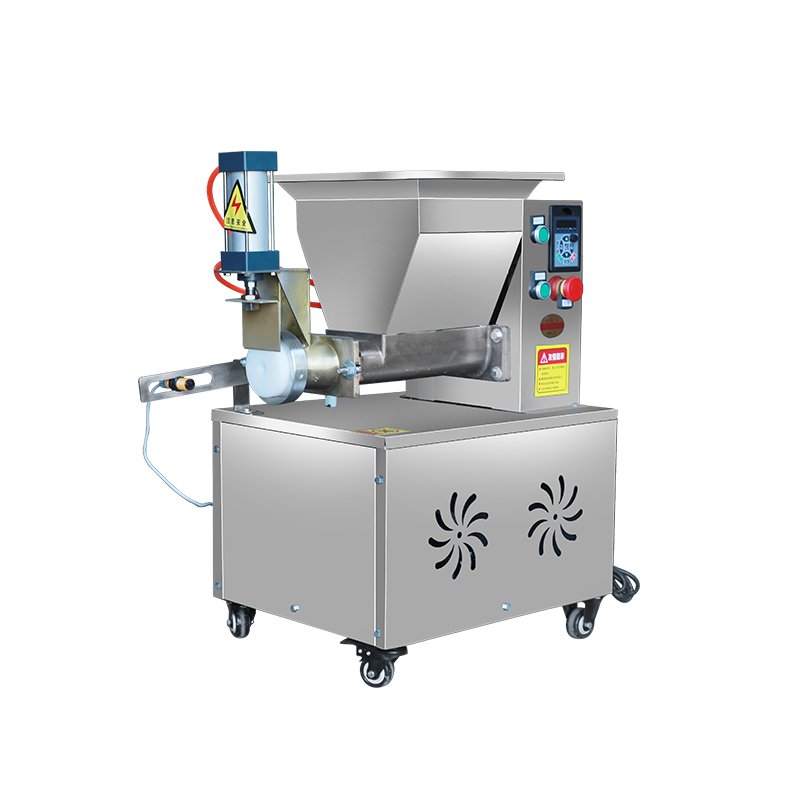
If you need both front-stage dough kneading and block cutting equipment, you can refer to our company. commercial stainless steel kneading machine with Fully automatic dough dividing and quantifying machine To form a complete production line.
3. Installation and commissioning steps: from installation to trial production
After the equipment arrives, follow these steps to reduce the risk of failure:
- Unboxing inspection Check the list of molds and spare parts, and check the hydraulic oil level (usually No. 46 wear-resistant hydraulic oil).
- Positioning and leveling Use a level to adjust the anchor bolts to ensure the equipment levelness is ≤0.5mm/m, otherwise it will affect the uniformity of the cake pressing.
- Electrical and gas connection The power supply is connected by a certified electrician to ensure reliable grounding; An oil-water separator needs to be installed in the air circuit.
- No-load trial operation Run for 10 minutes without feeding, check the hydraulic station for any abnormal noises and whether the pressure gauge is stable.
- Parameter setting and trial production Set the pressure, pressing time (usually 1-3 seconds), and mold temperature (if it has a heating function, it needs to be preheated to 150-180℃) via the touch screen. During trial production, a small amount of dough was used to adjust until the thickness of the cake embryo was consistent.
For more production line configuration examples, please visit our company. News & Technical Support Column.
4. Cost and Budget Reference: Equipment Price and Installation Fees
The price of CNC hydraulic fully automatic commercial cake presses is affected by production capacity, number of molds, and degree of automation, and the approximate range is as follows:
- basic type (Production capacity 20-30 pieces/minute, manual loading and unloading): Approximately 25,000-40,000 RMB.
- standard type (Production capacity 40 pieces/minute, with automatic conveyor belt): Approximately 50,000-80,000 RMB.
- high-end type (Production capacity 60 pieces/minute, fully automatic assembly line interface): approximately 100,000-150,000 RMB.
Installation costs mainly include: foundation treatment (approximately 2,000-5,000 yuan), electrical modification (approximately 3,000-8,000 yuan), gas line laying (approximately 1,000-3,000 yuan), and commissioning service fees (usually included in the equipment price, or additionally 2,000-5,000 yuan). It is recommended to reserve 10%-15% of the total equipment price as an installation and supporting budget.
5. Common Installation Pitfalls and Avoidance Tips
According to customer feedback, the following questions are the most common:
- CNC system alarm caused by unstable voltage It is recommended to install a voltage regulator (power ≥ 1.5 times the rated power of the equipment).
- Insufficient air pressure caused demolding failure It is necessary to ensure that the air compressor's discharge capacity is ≥0.3m³/min and to drain water regularly.
- Mould misalignment results in cake blank eccentricity After installation, the coaxiality between the mold and the workbench should be checked with an indicator, and the error should be ≤0.1mm.
- Neglecting lubrication and maintenance The hydraulic oil should be changed every 2000 hours, and the guide rails should be greased weekly.
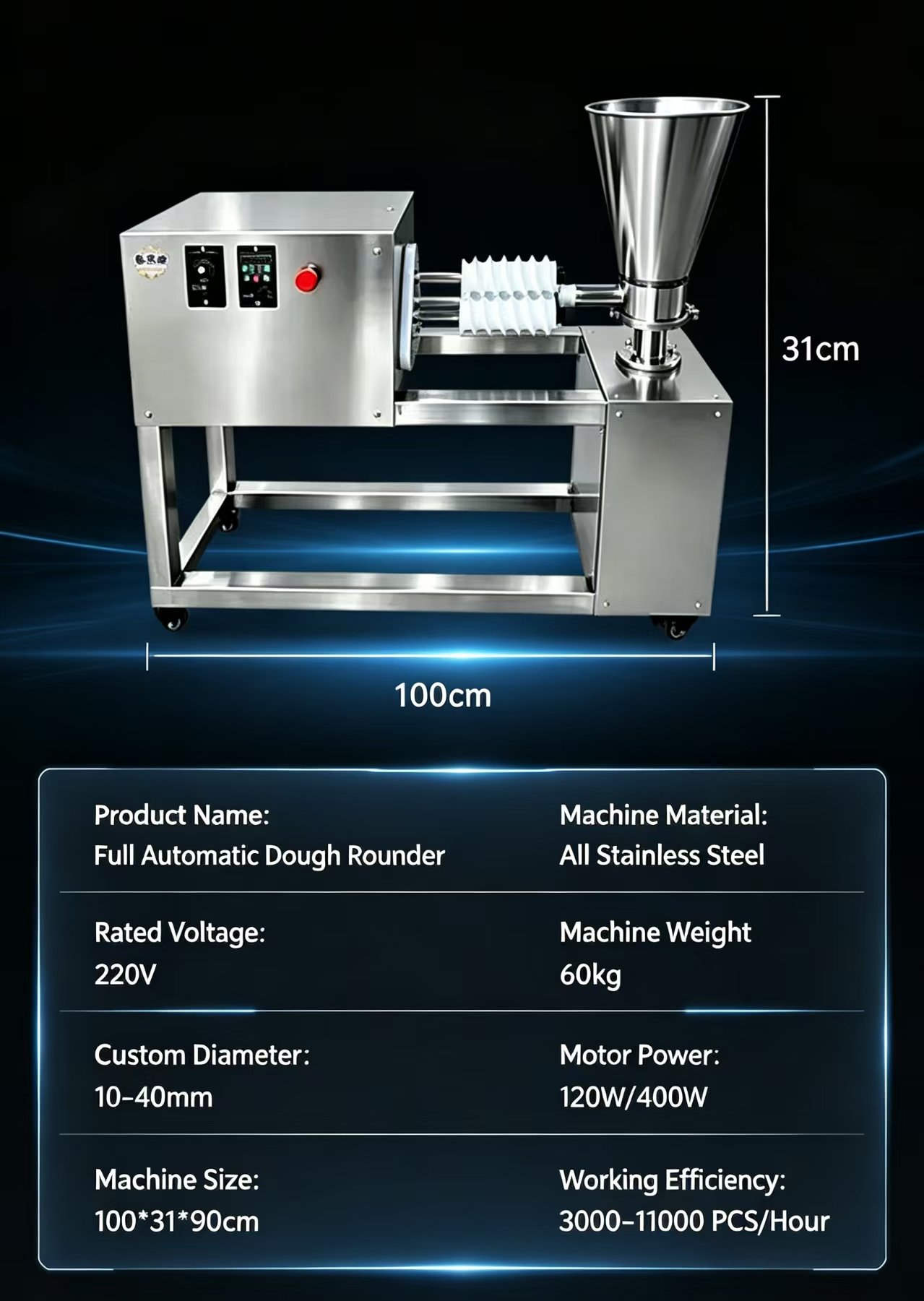
If you require matching rounding equipment, it can be used with... Fully automatic rounding machine Use this to improve production line continuity.
sum up
The installation of a CNC hydraulic fully automatic commercial cake press is not a simple matter of putting it in place, but a systematic engineering project involving power configuration, parameter calibration, and process verification. By grasping the five key parameters of pressure, cake diameter, production capacity, control system, and material, and strictly adjusting them according to the steps, the risk of production can be significantly reduced. It is recommended that suppliers be required to provide on-site installation guidance and operation training during procurement, and to keep complete parameter records for subsequent production replacement. Reasonable budget planning and pitfall avoidance will help you quickly achieve automated dough production.