With the increasing demand for efficiency and quality in the food processing industry, automated production lines have become the key for enterprises to enhance their competitiveness. However, in the face of a wide variety of equipment on the market, buyers are often faced with confusion in selection. This article will provide you with a practical purchasing guide from three dimensions: technical points, application scenarios and selection suggestions.
The core technical points of an automated production line
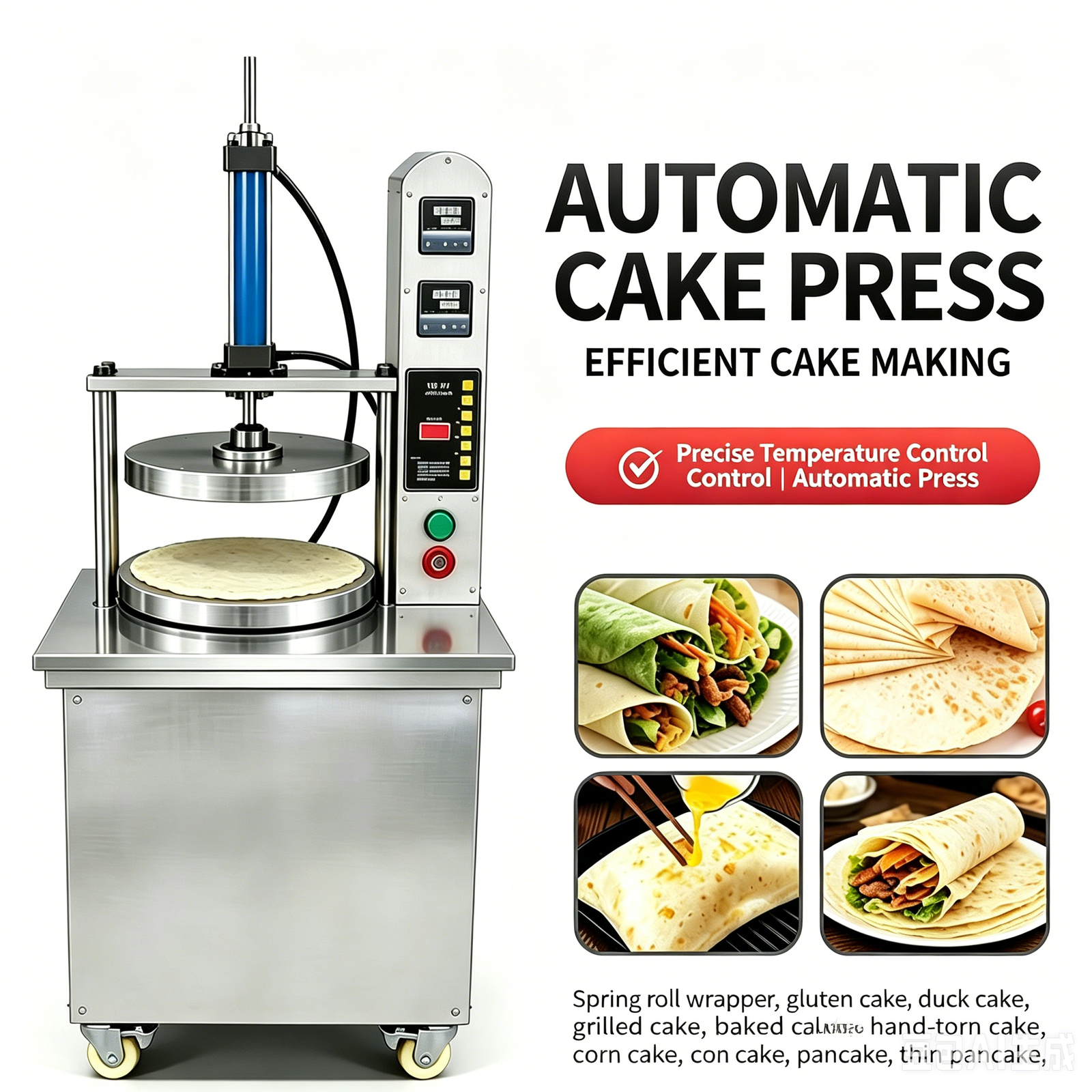
The core of modern food machinery lies in intelligent control and precision manufacturing. First,Servo drive systemThe application makes the equipment run more smoothly, locate more accurately, and reduce energy consumption by about 30% compared with traditional hydraulic systems. Secondly,PLC programmable controllerWith the human-machine interface, rapid adjustment and remote monitoring of production parameters are realized, greatly reducing manual intervention. In addition,Sanitary design(Such as the CIP cleaning system) ensures that the equipment meets food safety standards and reduces the risk of cross-contamination. For example, ourAutomatic production lineModular design is adopted to support rapid type change and adapt to multi-variety production requirements.
Typical application scenarios and equipment selection
The requirements for machinery vary significantly among different food categories. For baked goods,Tunnel ovenandAutomatic filling machineIt is the core equipment, and attention needs to be paid to temperature control accuracy (± 1 ° C) and capacity matching. For beverage filling,High speed filling machineAseptic filling capacity is required, and the filling accuracy should be ± 0.5%. In meat processing,Chopping machineandVacuum tumblerThe degree of vacuum and speed control directly affect the taste of the product. When purchasing, the supplier should be required to provide the technical parameter table of the equipment and inspect its production cases on site. We recommend giving priority to providingComplete line solutionThe supplier to ensure a seamless connection between all links, such as ourindustry solutionshave helped many enterprises achieve a capacity increase of more than 20%.
Four key dimensions of selection and evaluation
- Capacity and scalability: Select equipment with reserved expansion space based on current and future capacity needs over the next 3-5 years to avoid duplicate investments.
- Energy consumption and maintenance costs: Compare the energy efficiency rating (e.g., Class I energy efficiency) and the replacement cycle of vulnerable parts. Long-term operating costs are often more important than initial investments.
- Automation and data interfaces: Ensure the equipment supports industrial Ethernet interfaces for easy integration into MES systems and traceability of production data.
- After-sales service and spare parts supply: Evaluate the supplier's service network and response time to ensure minimal downtime due to faults.
Return on investment cycle calculation
Taking a medium-sized automated packaging line as an example, the initial investment is approximately 800,000 yuan, but it can reduce the need for 6 operators, saving about 300,000 yuan in annual labor costs and reducing the defect rate by 2%, saving about 100,000 yuan in raw material costs annually. Overall, the payback period is about 2 years. Additionally, automated production improves product consistency and helps secure high-end customers. It is recommended that purchasers request a detailed return on investment analysis report from suppliers before making decisions.
Summary
Selecting an efficient and energy-saving automated production line requires a comprehensive evaluation across multiple dimensions: technology, application, cost, and long-term development. Purchasers are advised to compare solutions from multiple suppliers based on their specific needs and prioritize companies with integrated line capabilities and robust after-sales systems. For more details on equipment selection, please visit our Product Center or consult a professional advisor.