How Food Machinery Can Aid Antibiotic-Free Food Production: Equipment Selection and Hygienic Design Guidelines
In recent years, the problem of antibiotic resistance has become increasingly severe, and some infections caused by foodborne bacteria have faced the dilemma of having no drugs to treat them. The World Health Organization has repeatedly warned that if no action is taken, drug-resistant bacteria may cause 10 million deaths per year by 2050. Against this backdrop, the food industry is under great pressure: reducing the use of antibiotics in farming and processing to control the spread of drug-resistant bacteria at the source. For food machinery purchasers, choosing processing equipment that can support antibiotic-free production, improve hygiene standards, and reduce cross-contamination is not only a compliance requirement, but also a key to corporate social responsibility and brand differentiation. This article will explore in depth the core role of food machinery in antibiotic-free food production and provide practical selection advice.
The Core Requirements of Food Machinery for Antibiotic-Free Production
Antibiotic-free production means that from raw materials to finished products, the entire chain must minimize the risk of microbial contamination, especially the introduction and spread of drug-resistant bacteria. This places three core requirements on food machinery:
- Hygienic Design: Equipment must be easy to thoroughly clean and disinfect, avoiding dead corners, crevices, and rough surfaces. According to the European Hygienic Engineering and Design Group (EHEDG) standards, the roughness of surfaces in contact with food should be Ra ≤ 0.8 μm, and all welds should be continuous and smooth.
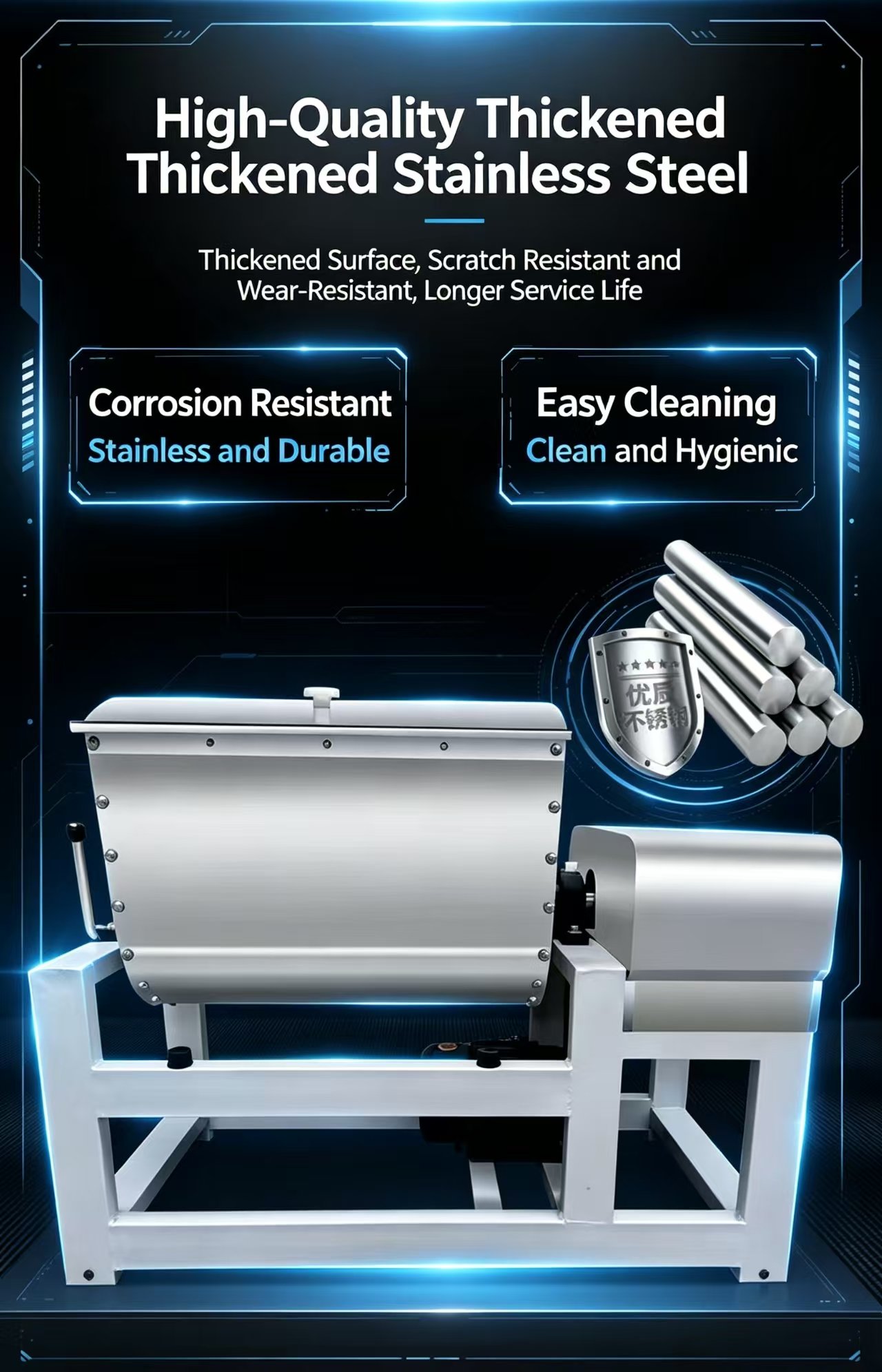
- Material Compatibility: Prioritize the use of 316L stainless steel, which has better corrosion resistance than 304 and can withstand frequent use of strong disinfectants (such as peracetic acid and chlorine dioxide) to prevent equipment corrosion and biofilm growth.
- Closed and Automated:Reduce manual intervention by adopting a piped, closed conveying system to avoid microbial contamination from human contact. An automated CIP (Cleaning in Place) system ensures repeatability of cleaning parameters (temperature, concentration, time) and reduces human error.
For example, in meat processing, replacing traditional open marinating with a vacuum tumbler reduces microbial cross-contamination risk by over 30%. For more information on hygienic equipment, please refer to theProduct Center.
Key Equipment Selection: From Cleaning to Sterilization
Achieving antibiotic-free production requires selecting specialized equipment for different process stages. Below are the technical highlights of three key equipment types:
- Cleaning and Disinfection Equipment:Recommend using a multi-stage bubble cleaning machine combined with ozone water disinfection. Ozone concentration should be controlled at 0.5-2 ppm with a contact time of 5-10 minutes to effectively kill 99.9% of foodborne pathogens (e.g., Salmonella, Campylobacter) without chemical residues. The equipment should be equipped with an automatic water replenishment and concentration monitoring system.
- Thermal Processing Equipment:Pasteurizers or HTST (High Temperature Short Time) sterilization systems must ensure temperature uniformity within ±0.5℃. For liquid foods, plate heat exchangers are easier to clean than tube heat exchangers, but attention should be paid to the temperature resistance and aging resistance of the sealing ring material (EPDM or silicone recommended).
- Packaging Equipment:Vacuum packaging or MAP (Modified Atmosphere Packaging) can significantly extend the shelf life of antibiotic-free foods. Select models with high vacuum levels (≤5 mbar) and equipped with online leak detection to prevent secondary contamination.
When selecting equipment, it is essential to request from the supplier the certificate of the equipment's compliance with hygiene standards (such as 3-A, EHEDG) and verify its cleaning validation report. For more industry solutions, please browse theNews and Updates.
Application scenarios: meat, dairy products, and ready-to-eat foods
Different categories have different focuses on the requirements for antibiotic-free production:
- Meat processing: The focus is on the carcass washing and cutting stages after slaughter. A high-pressure spray system (pressure 8-12 bar) combined with lactic acid spray (2-4% concentration) can reduce the bacterial load on the carcass surface by 1-2 log CFU/cm². Cutting equipment should use stainless steel conveyor belts to avoid scratches from plastic parts harboring bacteria.
- Dairy processing: Antibiotic-free milk requires strict isolation. The equipment should have an online antibiotic residue detection function, such as a β-lactam rapid detector with a sensitivity of 2 ppb. After pasteurization, the filling machine should operate under a hundred-level laminar flow.
- Ready-to-eat foods: Such as salads and sandwiches, which no longer undergo sterilization, have the highest hygiene requirements for equipment. It is recommended to use UV-C sterilization tunnels with a dose of ≥40 mJ/cm², combined with metal detectors and X-ray foreign object detectors to ensure safety.
According to FDA data, about 60% of foodborne disease outbreaks caused by ready-to-eat foods are related to incomplete equipment cleaning. Therefore, it is crucial to invest in equipment that can verify cleaning effectiveness.
Purchasing decision checklist: Five must-verify indicators
As a B2B purchaser, when evaluating food machinery, please be sure to verify the following five indicators:
- Surface roughness: Require the supplier to provide a Ra test report to ensure ≤0.8μm.
- Cleaning validation:The equipment should provide a CIP cleaning curve (conductivity, temperature, flow rate) and the results of microbial challenge tests (such as a reduction of more than 4 log).
- Material certificates:316L stainless steel must be accompanied by a material certificate (EN 1.4404 or ASTM A276).
- Seal compatibility:Confirm that the sealing material is resistant to the list of disinfectants, to avoid swelling or cracking.
- Energy and water consumption:Without antibiotic production, cleaning frequency often increases, so selecting water-saving equipment (such as pulse cleaning) can reduce operating costs by more than 30%.
It is recommended to specify hygienic design clauses in the procurement contract and require suppliers to provide hygiene verification services after on-site installation.
Summary: Responding to the challenge of antibiotic resistance with equipment upgrades
Antibiotic resistance has become a global public health crisis, and the food industry must reduce the introduction and spread of drug-resistant bacteria from the processing stage. By selecting food machinery with excellent hygienic design, easy cleaning and disinfection, and a high degree of automation, companies can not only meet the strict requirements of antibiotic-free production but also improve product safety and market competitiveness. As purchasers, we should include hygiene performance in the total cost of ownership (TCO) evaluation of equipment, rather than focusing solely on initial price. Investing in the right equipment is investing in a sustainable food future.