From the FDA official's speech to the food machinery industry: How to build a safer food supply chain
A recent speech by an FDA official on food safety regulation has sparked a lot of discussion in the industry. A lawyer with more than 30 years of experience in food safety litigation said that he agreed with almost every sentence in the speech. Behind this reflects a consensus that food safety cannot be detected at the end point alone, but must be fully controlled from the source of production - including the design, cleaning and maintenance of food machinery. For food machinery buyers, this means that in addition to focusing on capacity and efficiency, hygienic design, cleanability and compliance need to be at the heart of the selection of equipment. This article will explore how food machinery can help build a safer food supply chain in light of industry trends.
Hygienic design: reducing the risk of contamination at the source
In their speeches, FDA officials emphasised that preventative controls were more important than post-event recalls. This philosophy directly mirrors the hygienic design of food machinery. Devices with hard-to-clean dead ends, rough welds or non-food grade lubricants can become breeding grounds for bacteria. Buyers should prioritise compliance withEHEDG (European Hygienic Engineering Design Group)or3-A Sanitary StandardsCertified equipment. For example, in dairy and beverage production lines, pumps and valves with seamless welding, tilt drainage, and quick disassembly structures can significantly reduce microbial residues. According to industry data, good hygienic design can reduce cleaning time by up to 40% and reduce chemical cleaning agent usage by 50%, thereby indirectly improving food safety.
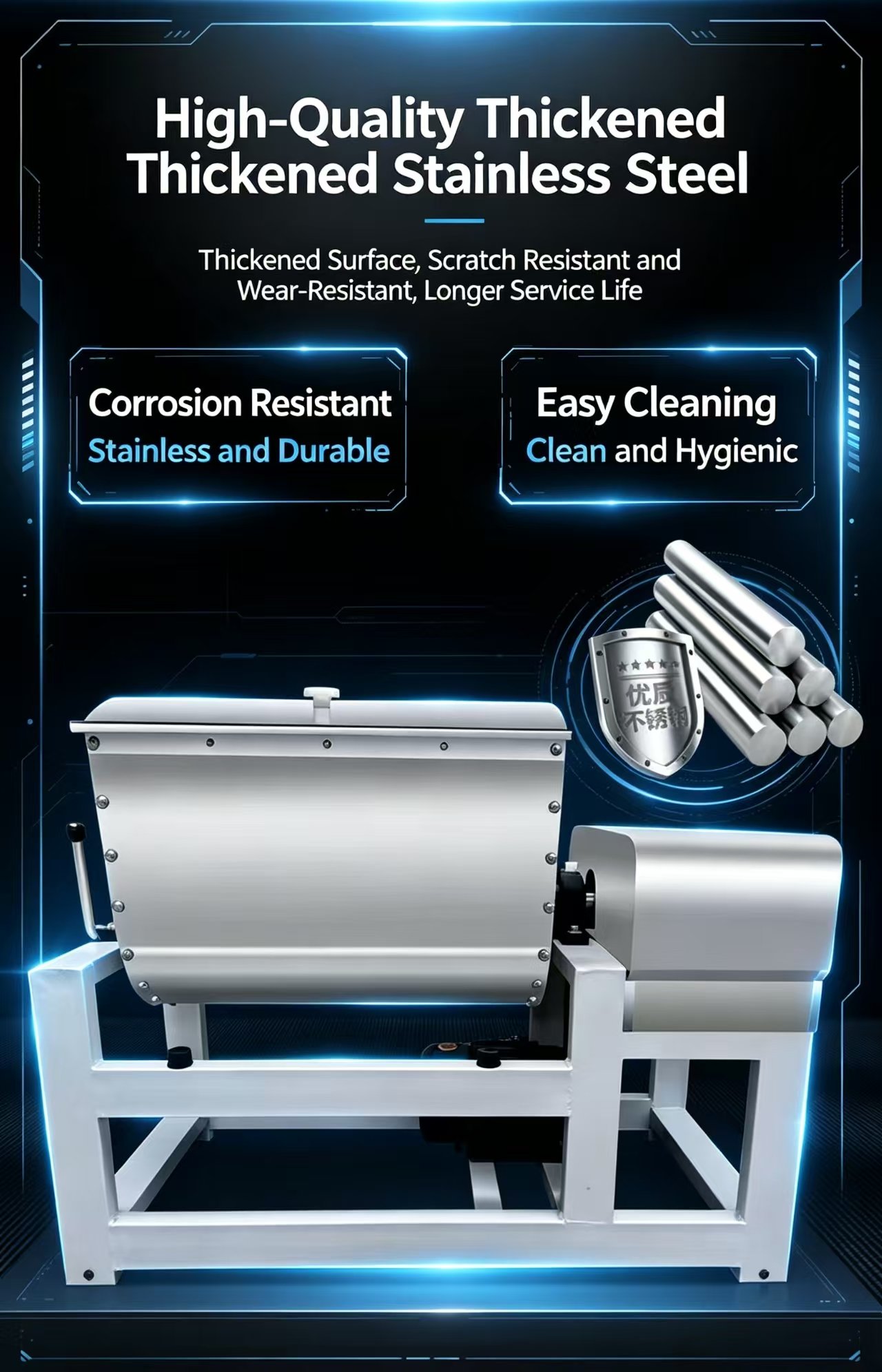
In addition, the material of the equipment is also crucial. 316L stainless steel excels in humid and acidic environments due to its corrosion resistance, while ordinary carbon steel is prone to rust and contaminate the product. Be sure to confirm the material proof of the part that comes into contact with food when purchasing.
Cleaning and disinfection: both automation and verification
The presentation mentioned that regulators are increasingly concerned about whether companies have effective cleaning verification procedures. For food machinery, CIP (on-site cleaning) and COP (on-site dismantling and washing) systems have become standard. But installing a CIP system is not enough, the key isRepeatability and verifiability of cleaning resultsModern CIP systems should be equipped with automatic monitoring of flow, temperature, concentration and time, and generate traceable recordsFor example, the introduction of fully automated CIP in a large meat processing plant reduced the failure rate of cleaning verification from 12% to less than 2%
When evaluating the equipment, the purchaser should require the supplier to provide a cleaning verification report and confirm whether the equipment supports fast verification methods such as ATP fluorescence detection. At the same time, the surface of the equipment should avoid loose parts such as bolts and rivets, and welding or quick-loading clamps should be preferred.
Application scenarios: Selection points for different food industries
The requirements for machinery in different food categories vary significantly. Here are some suggestions for typical scenarios:
- Baking and Snacking: Focus on dust-proof design and easy-to-clean conveyor belts. Flour dust is prone to explosions, and equipment must comply with ATEX explosion-proof directives. It is recommended to choose a modular conveyor belt for easy daily disassembly and cleaning.
- Dairy products and beveragesAseptic filling and ultra-high temperature sterilization (UHT) systems are key. Equipment needs to withstand high temperatures and chemical cleaning, and double-seat valves and aseptic pumps are preferred.
- Meat and aquatic productsCutting, grinding and mixing equipment should be easy to disassemble and capable of withstanding high pressure flushing. It is recommended to use stainless steel body and IP69K protection grade motor.
- Sauces and SeasoningsHigh viscosity materials are prone to residue, so a wall-scraping stirring and positive displacement pump should be selected to ensure that there are no dead ends in the pipeline.
No matter what the scenario is, purchasers should refer to itOur product catalog, screen equipment that meets its own hygiene level requirements. At the same time, you can pay attention toIndustry newsUpdates on FDA and EU regulations to ensure compliance at all times.
Selection recommendations: Balancing performance, compliance and total cost of ownership
Many buyers are prone to falling into "price-only" or "capacity-only" when selecting models. But the speech of FDA officials reminds us that the brand loss and recall cost caused by food safety accidents far exceed the price difference of equipment. Therefore, it is recommended to useTotal Cost of Ownership (TCO)Perspective:
- initial cost: Including equipment prices, installation and commissioning costs.
- operating costEnergy consumption, water consumption, cleaning agent and labor.
- Maintenance costSpare parts replacement frequency and shutdown losses.
- Compliance costRectification, penalty or recall due to non-compliance.
For example, a 15% more expensive filling machine with automatic cleaning and remote monitoring could save cleaning time and reduce waste recycling costs within two years. Buyers should ask suppliers to provide TCO analysis and visit the site of the same type of equipment that is already in operation.
In addition, modular design is becoming a trend. It allows companies to gradually invest according to capacity expansion and simplifies spare parts management. inOur product pageYou can find a wide range of modular equipment to meet the production needs of different scales.
summary
The FDA official's speech received rare approval because it returned to the basic logic of food safety: prevention is better than remediation. For buyers of food machinery, this means making hygienic design, verifiable cleanliness and compliance hard indicators rather than options. By focusing on EHEDG/3-A certification, CIP automation, materials and TCO, companies can not only reduce the risk of recalls, but also improve operational efficiency. In the context of increasingly stringent regulations, investing in the right food machinery is investing in the long-term credibility of the brand.