Recently, Czech public health officials issued a botulinum toxin warning against a pork almond butter, which was caused by health problems after consumers ate it. This incident once again sounded the alarm about the safety of food processing, especially for high-risk categories such as meat products and sauces. The hygiene management and sterilization process on the production line are directly related to the safety of consumers at the end point. For food machinery buyers, understanding the contamination risk points and choosing equipment with advanced hygiene design are the core strategies to avoid such accidents.
Botulinum toxin contamination risk and key points of prevention and control in processing
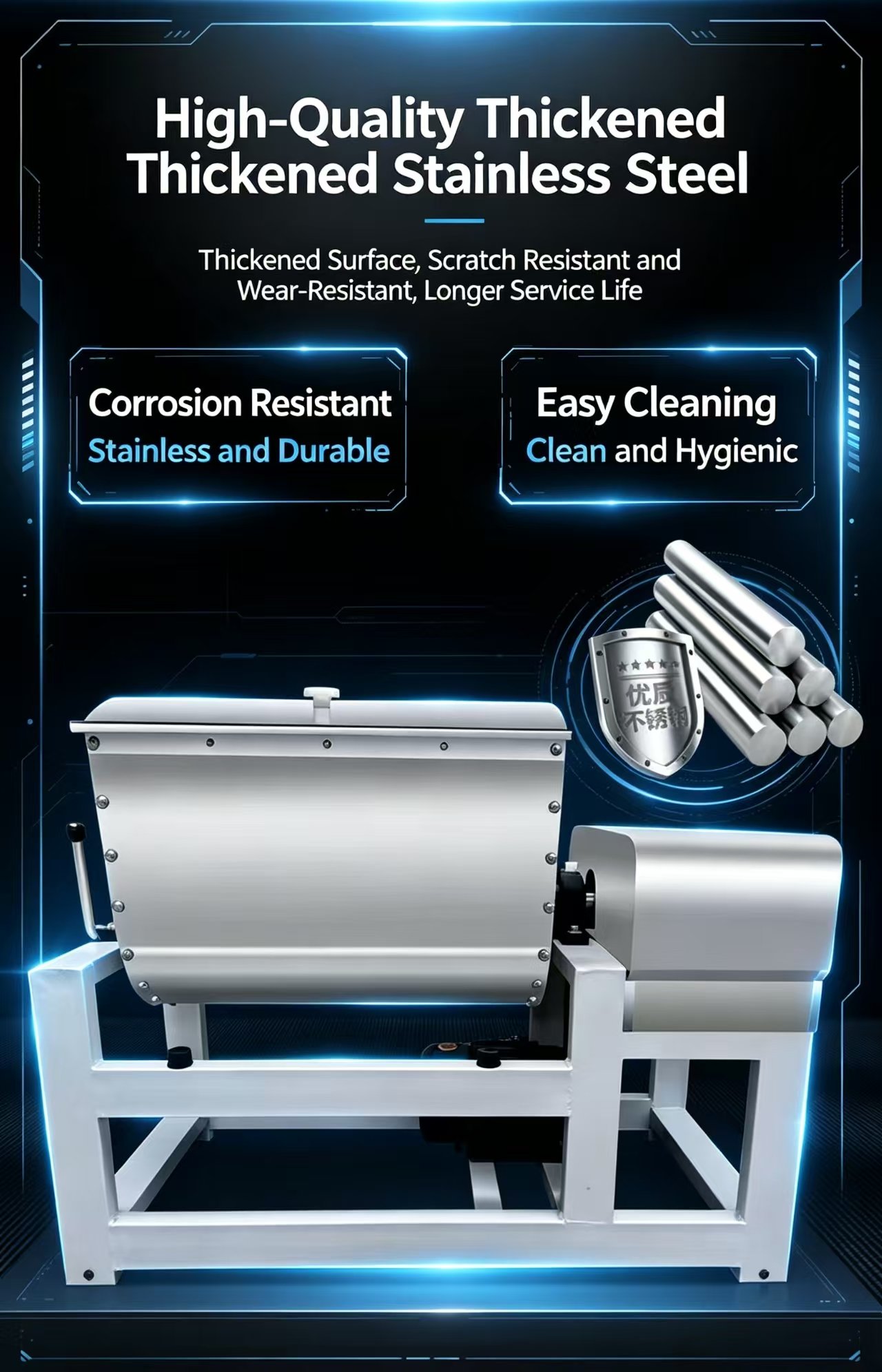
Clostridium botulinum is an anaerobic bacteria that can easily multiply and produce neurotoxins in an environment with low oxygen, low acid, and suitable water activity. The pork sauce involved in this case is a low-acid, high-moisture, vacuum-packed product, which just provides ideal conditions for spore germination. In the processing process, raw material treatment, mixing and stirring, filling and sealing, and sterilization and cooling may all become contamination entry points. Especially in stirring and filling equipment, if there are sanitary dead spots (such as gaps, gasket aging, or incomplete CIP cleaning), the residual protein and fat will form a biofilm to protect the survival of the spores. Therefore, purchasers should prioritize equipment with a contact surface of 316L stainless steel, a surface roughness Ra ≤ 0.8μm, and support for in-line cleaning (CIP) and in-line steam sterilization (SIP). For example, a vacuum mixer with a double helix mixer can reduce material residue, while a filling head with an automatic cleaning nozzle can effectively prevent cross-contamination.
Cross-Contamination Control of Facial Products Production Line from the Perspective of Salmonella Incident
During the same period, another noodle-related salmonella outbreak also attracted widespread attention. Salmonella is mainly transmitted through raw materials (such as egg liquid, poultry meat) or human contact. In the noodle production line, common risks come from incomplete separation of raw and cooked, insufficient cleaning of conveyor belts, and dust diffusion. Modern continuous production lines need to be designed with separate raw and cooked areas, and equipped with positive pressure air supply systems to prevent aerosol transmission. In addition, the use of modular conveyor belts and quick-release structures can significantly reduce cleaning time. For example, a well-known brand of noodle production line uses stainless steel hinged belts, which can be cleaned in 15 minutes with a high-pressure hot water washing station, reducing the probability of cross-contamination by about 70%. When evaluating equipment, purchasers should require suppliers to provide hygienic design certification (e.g. EHEDG or 3-A standards), and verify whether the equipment has an automatic lubrication system (to avoid lubricating oil from penetrating into food) and an anti-accumulation angle design (e.g. hopper tilt ≥ 45 °).
Selection of sterilization processes: tradeoffs from pasteurization to ultra-high pressure technology
For heat-resistant spores such as botulinum toxin, traditional high-temperature and high-pressure sterilization (such as 121℃, 20 minutes) is effective, but it can damage the product's taste and nutrients. In recent years, ultra-high-pressure technology (HPP, 600MPa, 5 minutes) can inactivate spores under low-temperature conditions and retain the original flavor of the sauce, but the equipment investment is high (about 2 million to 5 million yuan per unit). For small and medium-sized meat processing enterprises, it is recommended to adopt continuous microwave sterilization or ohmic sterilization. The former can raise the core temperature to over 90℃ within 3-5 minutes, while the latter achieves rapid and uniform heating through electric current penetrating the materials. Taking pork sauce as an example, if a microwave tunnel (frequency 915MHz, power 80kW) is used, the processing time can be shortened to one-sixth of the traditional process and energy consumption reduced by 30%. Purchasers should comprehensively evaluate the sterilization methods based on the product characteristics, production capacity requirements, and budget. At the same time, it is necessary to configure a temperature-time automatic recorder to ensure that the sterilization parameters of each batch can be traced back and meet the requirements of the HACCP system.
Selection advice: Build a preventive sanitary defense line.
Based on the above case, food machinery purchasers should follow three principles when selecting models: First, the whole life cycle hygiene cost, that is, the balance between the initial investment of the equipment and the cost of cleaning and maintenance. For example, although the tank with seamless welding is 15% more expensive than bolting, it can reduce the amount of cleaning agent and manual labor hours, and the cost can be recovered within two years. Second, automation and digitization. Select equipment that can integrate sensors and Internet of Things modules, monitor key parameters such as temperature, pressure, and cleaning liquid concentration in real time, and generate electronic batch records. Third, the supplier's verification service requires the provision of equipment hygiene test reports (such as microbial challenge tests), and arranges trial production verification. In addition, it is recommended that purchasers introduce hygiene design consultants at the plant planning stage to avoid the risks caused by later renovations. For more equipment options, please refer to ourProduct Center, or browseIndustry informationGet the latest technology updates.
summarize
The Czech meat sauce incident and the noodle Salmonella outbreak alert us that food safety is the core driving force of food machinery design. From raw material processing to finished product packaging, every link needs to build a strong defense line through equipment hygiene design, efficient sterilization, and intelligent monitoring. Purchasers should abandon the concept of simply pursuing low prices, take hygiene performance as the primary evaluation indicator, and with the technical support of professional suppliers, achieve the transformation from "passive response" to "active prevention". Only in this way can we ensure consumer health and enhance brand credibility and market competitiveness.